
Never use nylon wall plugs or plasterboard anchors for safety-critical fixings. Handrails, stair rails, banisters, balustrades, gates, ladders, climbing or play equipment, overhead fixings, and anything else whose failure could cause a fall or injury need a fixing designed and rated for that purpose — typically a through-bolt, a mechanical anchor or a resin-bonded anchor with a published load rating (and, for structural use, a European Technical Assessment). If you are not certain the wall and the fixing are up to the job, get advice from a builder or structural engineer.
Plasterboard Fixings Guide — How to Fix Into Hollow Walls
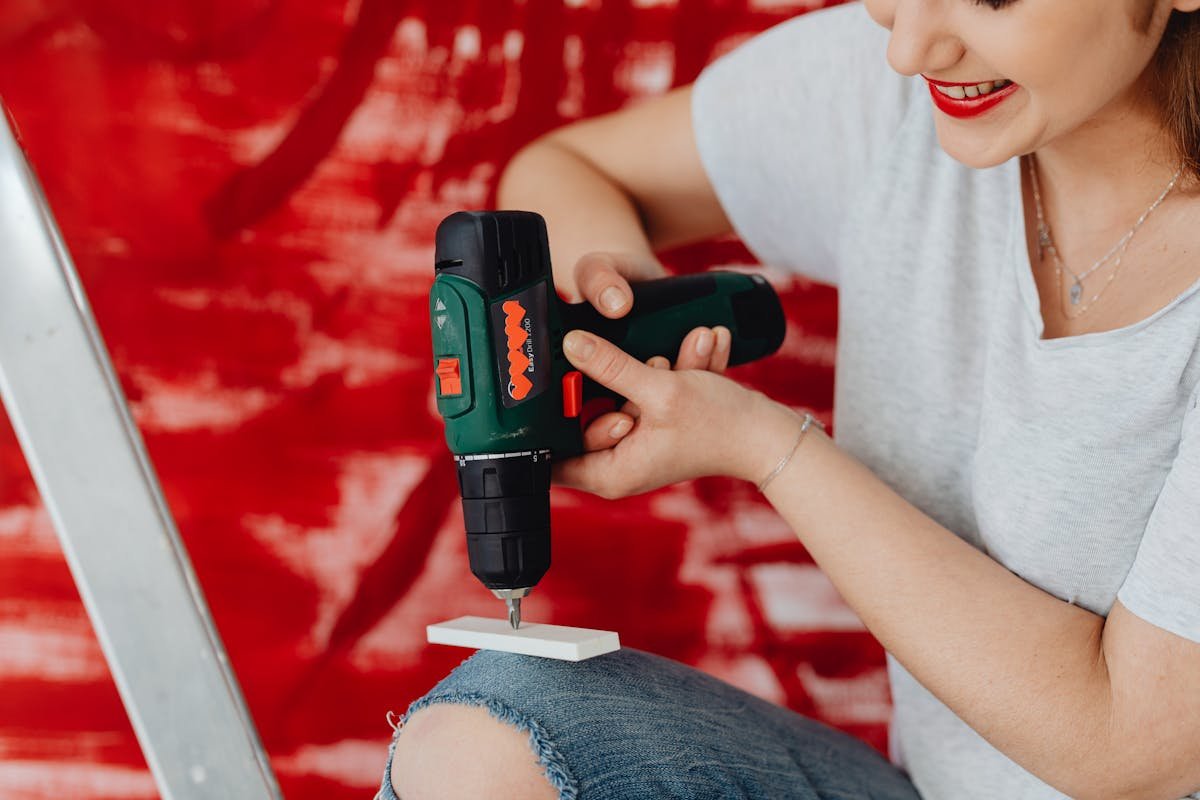
Standard wall plugs don’t work in plasterboard — they’ll spin in the hole and pull straight out under any load. Plasterboard (also called drywall or gypsum board) is typically only 12.5mm thick, which means there’s nothing solid for a standard expansion plug to grip. You need specialist plasterboard fixings designed to spread load across the board, grip behind it, or anchor into the timber studs.
Important
Never use standard coloured wall plugs (yellow, red, brown, blue) in plasterboard — they are designed for solid masonry only. Using them in plasterboard will fail, potentially causing damage to your wall and whatever you’re trying to hang.
Types of Plasterboard Fixings
1. Self-Drill Plasterboard Fixings (Metal)
These are the most popular plasterboard fixing for light to medium loads. They have a sharp, coarse thread that grips the plasterboard directly — no pre-drilling required. Simply drive them in with a screwdriver or drill, then insert the screw. They typically hold 15–20kg per fixing in 12.5mm plasterboard.
Best for: Curtain pole brackets, towel rails, light shelves, picture frames, bathroom cabinets.
2. Spring Toggles (Butterfly Fixings)
Spring toggles pass through a pre-drilled hole and spring open behind the plasterboard, distributing load across a wide area. They provide very strong holding power — typically 25–40kg per fixing. The downside is they require a larger hole (usually 10–13mm) and the toggle drops into the cavity if you remove the screw.
Best for: Heavy mirrors, large shelving brackets, TV brackets (lighter TVs), curtain tracks.
3. GripIt Fixings
GripIt fixings are a popular UK brand that uses a rotating wing mechanism behind the plasterboard. They come in different sizes (15mm yellow up to 25mm red) and are reusable — the wing stays in place even if you remove the screw. GripIt publishes “holds up to” figures of 71 kg (15 mm yellow), 74 kg (18 mm red), 93 kg (20 mm brown) and 113 kg (25 mm blue). Those are test figures on 15 mm plasterboard, not working loads — GripIt’s own safe-load datasheet gives 30, 40, 50 and 60 kg for the same four sizes, and most UK domestic walls are 12.5 mm board, making them among the strongest plasterboard fixings available.
Best for: TVs, heavy shelves, radiators, kitchen wall units on stud walls, anything heavy on plasterboard.
4. Gravity Toggles (Snap Toggles)
Gravity toggles have a metal channel that flips down behind the plasterboard using gravity or a push mechanism. They’re very strong (often 40–60kg per fixing) and the anchor stays in place permanently, so you can remove and replace the bolt without losing the fixing. They’re more expensive but ideal for heavy, permanent installations.
Best for: Heavy TV wall mounts, radiators, anything that needs periodic removal.
Not for grab rails, handrails or anything else whose failure could cause a fall. Those are safety-critical fixings: no cavity fixing is adequate in plasterboard, and the rail must be fixed to solid backing — a timber noggin or plywood pattress screwed to the studs — using an ETA-approved anchor selected per BS 8539:2012+A1:2021. Full guidance
5. Plastic Plasterboard Plugs
These look similar to standard wall plugs but have wider threads and barbs designed to grip plasterboard. They’re the cheapest option but have limited holding power — typically only 5–10kg per fixing. Pre-drill a small pilot hole first.
Best for: Very light loads only — smoke alarms, small picture frames, cable clips.
Plasterboard Fixing Comparison
| Fixing Type | Pre-Drill? | Reusable? | Cost |
|---|---|---|---|
| Self-drill (metal) | No | No | £ |
| Spring toggle | Yes (10–13mm) | No | ££ |
| GripIt | Yes (varies) | Yes | £££ |
| Gravity toggle | Yes (13mm) | Yes (bolt only) | £££ |
| Plastic plug | Yes (small) | No | £ |
Recommended Wall Plugs & Fixings
As an Amazon Associate we earn from qualifying purchases. Check fitment & current price on Amazon (affiliate links).
Before you buy: check that the size, fitting/bore and maximum-rated speed marked on the accessory match what your tool’s manual specifies. We have not physically tested these products; listings are compiled from published specifications. These are affiliate links.
Load figures are not listed here because a plug’s capacity depends on the product and the wall it goes into, not on its colour. See the substrate-by-substrate load table, sourced from fischer’s published figures.
Fixing Into Timber Studs
Best Practice
Whenever possible, fix heavy items directly into the timber studs behind plasterboard rather than relying on plasterboard fixings alone. A single No. 10 screw driven 40mm into a timber stud will hold far more than even the strongest plasterboard fixing. Use an electronic stud finder or tap the wall and listen for the change from hollow to solid.
Timber studs are typically spaced at 400mm or 600mm centres. If your bracket holes don’t align with studs, fix one side into a stud and use a heavy-duty plasterboard fixing for the other side.
Frequently Asked Questions
How do I know if my wall is plasterboard or masonry?
Knock on the wall. Plasterboard sounds hollow, masonry sounds solid. You can also try pushing a drawing pin in — it slides into plasterboard easily but won’t penetrate brick or block. External walls are almost always masonry; internal partition walls are often (but not always) plasterboard on timber studs.
Can I hang a TV on plasterboard?
Yes, but only with the right fixings. For TVs up to about 15kg, heavy-duty plasterboard fixings like GripIt or gravity toggles work well. For larger, heavier TVs (30kg+), always fix the bracket into timber studs — at least two stud points — and supplement with plasterboard fixings where needed.
What about dot-and-dab walls?
Dot-and-dab (or dry-lined) walls have plasterboard stuck directly to masonry with adhesive blobs. The gap between the board and masonry is usually 10–15mm. Standard plasterboard fixings work, but if you can drill through the plasterboard and into the masonry behind, use a long wall plug for the strongest fixing.
Recommended Plasterboard Fixings
| Product | Type | Best For | Link |
|---|---|---|---|
| GripIt 15mm Plasterboard Fixings (4 Pack) | GripIt toggle | Heavy loads on plasterboard — GripIt publishes “up to 71 kg” for the 15 mm; its safe-load datasheet gives 30 kg | View on Amazon |
| Fischer DuoPower 6x30mm (100 Pack) | Universal plug | Works in plasterboard AND masonry | View on Amazon |
| Bulk Hardware Self-Drill Fixings (50 Pack) | Self-drill metal | Quick, general-purpose plasterboard fixing | View on Amazon |
As an Amazon Associate, we earn from qualifying purchases.
Where to Buy Plasterboard Fixings
Plasterboard Fixing Kits on Amazon
Spring Toggle Fixings on Amazon
How we compile this guide
We cross-reference compatibility details against manufacturer specifications where available, official tool manuals, and the physical standards that govern fitment (bore sizes, arbor diameters, voltage platforms, connector types). We prioritise primary sources over retailer listings, flag anything we can’t confirm, and re-verify the data on a regular cycle. Where we give a buying recommendation, we tell you the reasoning — not just the link. More on our method →