Power tool battery specs are full of abbreviations and technical terms that can be confusing if you’re not an electrical engineer. This glossary breaks down every term you’ll encounter when shopping for cordless tool batteries, in plain English.
Core Battery Specifications
Voltage (V)
What it means: Voltage is the “pressure” that pushes electrical current through a circuit. Higher voltage means more force available to drive the tool’s motor.
Why it matters: Voltage determines which tools a battery is compatible with. An 18V battery only works in 18V tools. Higher voltage platforms (36V, 54V, 60V) can drive more powerful tools like table saws and large angle grinders.
Key detail: “20V MAX” and “18V” refer to the same class of battery. 20V MAX is the peak (unloaded) voltage, while 18V is the nominal (working) voltage. DeWalt uses the 20V MAX label; Makita and Milwaukee use 18V. The batteries deliver the same real-world power.
Amp-Hours (Ah)
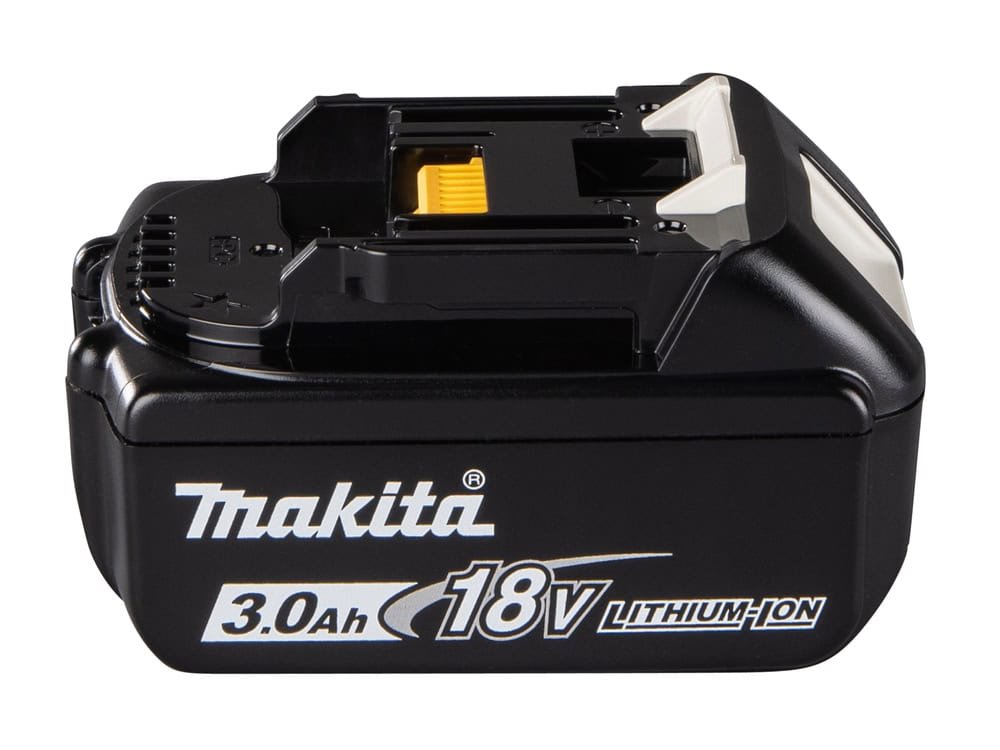
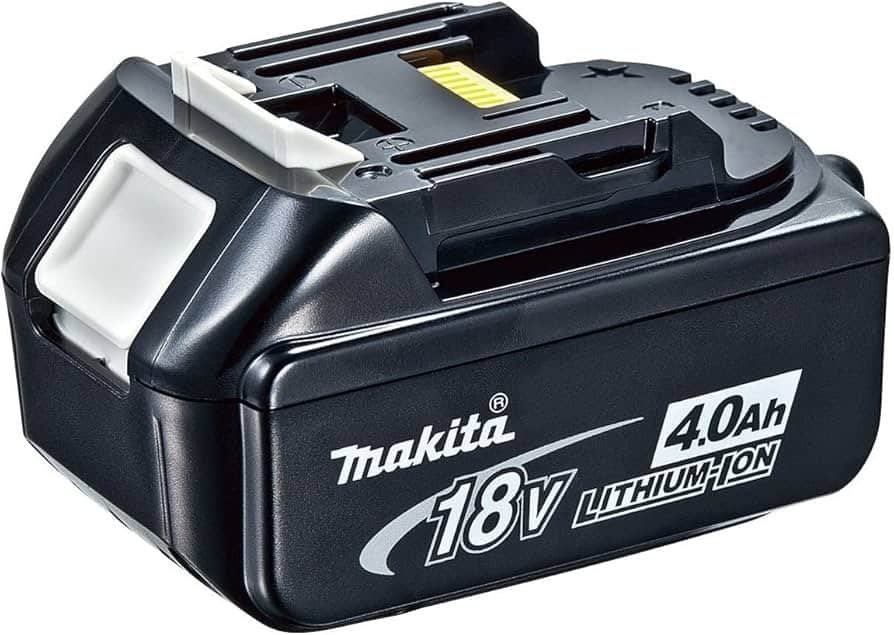
What it means: Amp-hours measure a battery’s capacity — how much energy it can store. Think of it as the “fuel tank size.” A 5.0Ah battery can deliver 5 amps for one hour, or 1 amp for five hours, in theory.
Why it matters: Higher Ah = longer runtime between charges. A 5.0Ah battery will run roughly twice as long as a 2.5Ah battery in the same tool under the same load.
Common capacities:
| Capacity | Typical Use | Weight |
|---|---|---|
| 1.5Ah – 2.0Ah | Light-duty: drilling, driving screws, lighting | Light (0.3–0.5 kg) |
| 3.0Ah – 4.0Ah | General-purpose: most tasks, good balance | Medium (0.5–0.7 kg) |
| 5.0Ah – 6.0Ah | Heavy-duty: continuous cutting, grinding, demolition | Heavy (0.7–0.9 kg) |
| 8.0Ah – 12.0Ah | High-output: extended heavy use, high-draw tools | Very Heavy (0.9–1.3 kg) |
Watt-Hours (Wh)
What it means: Watt-hours represent the total energy stored in a battery. It’s calculated by multiplying voltage × amp-hours. A 18V × 5.0Ah battery = 90Wh.
Why it matters: Wh is the most accurate way to compare batteries across different voltage platforms. A 36V 2.5Ah battery (90Wh) stores the same total energy as an 18V 5.0Ah battery (90Wh), even though their voltage and capacity numbers look different.
Battery Technology Terms
Lithium-Ion (Li-Ion)
The battery chemistry used in virtually all modern cordless tools. Lithium-ion cells offer high energy density, no memory effect, low self-discharge, and thousands of charge cycles. They replaced older NiCd (nickel-cadmium) and NiMH (nickel-metal hydride) batteries starting around 2005.
Battery Cells
Inside every tool battery pack are individual cylindrical cells — usually the 18650 or 21700 format (numbers refer to the cell dimensions in mm). A typical 18V 5.0Ah pack contains 10 cells arranged in a 5-series, 2-parallel configuration (5S2P). Better cells from manufacturers like Samsung, LG, Sony, and Panasonic deliver more consistent power and last more charge cycles.
BMS (Battery Management System)
An electronic circuit board inside every battery pack that monitors and protects the cells. The BMS handles overcharge protection (stops charging when cells are full), over-discharge protection (shuts off before cells are damaged), short circuit protection, temperature monitoring, and cell balancing (ensuring all cells charge and discharge evenly).
Memory Effect
A phenomenon where older battery chemistries (NiCd) would “remember” partial discharge levels and lose effective capacity over time. Lithium-ion batteries do not have memory effect — you can top them off at any charge level without degradation. This is one of the biggest advantages of modern tool batteries.
Self-Discharge
The rate at which a battery loses charge while sitting idle. Lithium-ion batteries self-discharge at roughly 2-3% per month. This means a fully charged battery left on a shelf for six months will still have around 85% charge — far better than NiCd batteries, which could lose 15-20% per month.
Charging Terms
Fast Charge / Rapid Charge
Chargers that restore a battery to full capacity in 30-60 minutes rather than the standard 60-90 minutes. Fast charging generates more heat and can slightly reduce long-term cell life, though modern BMS and charger communication systems mitigate this.
Dual-Port Charger
A charger with two battery slots that can charge two batteries simultaneously. Some dual-port chargers charge both at full speed; others prioritise one slot and charge the second at reduced speed.
Trickle Charge / Maintenance Charge
A very low charge rate applied after the battery reaches full capacity to counteract self-discharge. Most modern tool chargers use this to keep batteries topped off when left in the charger.
Performance Terms
Brushless Motor
A motor design that uses electronic commutation instead of physical carbon brushes. Brushless motors are more efficient (longer battery runtime), more powerful, and longer-lasting than brushed motors. Nearly all premium cordless tools now use brushless motors.
High Output / High Drain
Battery packs designed to deliver higher peak current than standard packs of the same capacity. Milwaukee’s High Output batteries and DeWalt’s POWERSTACK batteries fall into this category. They use higher-grade cells that can sustain greater discharge rates without voltage sag, which translates to better performance in demanding tools like grinders and circular saws.
Voltage Sag
The temporary drop in voltage that occurs when a battery is under heavy load. Cheaper cells and older batteries exhibit more voltage sag, causing the tool to feel less powerful. High-output batteries are specifically designed to minimise voltage sag.
Platform-Specific Terms
FLEXVOLT (DeWalt)
DeWalt’s dual-voltage battery technology. FLEXVOLT batteries automatically switch between 20V and 60V depending on which tool they’re inserted into. Two FLEXVOLT batteries can combine for 120V in select stationary tools. The voltage change is achieved by reconfiguring the internal cell arrangement from parallel to series.
REDLITHIUM (Milwaukee)
Milwaukee’s branding for their advanced lithium-ion battery technology. REDLITHIUM batteries feature proprietary cell chemistry and electronics optimised for trade use. REDLITHIUM HIGH OUTPUT packs deliver 50% more power and run 50% cooler than standard packs, according to Milwaukee.
Star Protection (Makita)
Makita’s battery-charger communication system. Star protection enables the charger and battery to exchange data in real-time, optimising charge current based on battery condition and temperature. Chargers with star protection can identify the battery type and adjust charging parameters accordingly.
ONE+ (Ryobi)
Ryobi’s 18V battery platform, primarily aimed at the consumer and DIY market. ONE+ is notable for its massive backwards compatibility — batteries introduced in 2024 work in tools from 2004 — and the wide range of non-traditional tools (fans, radios, glue guns, bug zappers) available on the platform.
Frequently Asked Questions
What does Ah mean on a battery?
Ah stands for amp-hours, which measures a battery’s capacity — essentially its fuel tank size. A 5.0Ah battery stores more energy and runs longer than a 2.0Ah battery. Higher Ah ratings mean longer runtime but also heavier weight.
Is a higher voltage battery more powerful?
Higher voltage provides more potential force to the motor, which can translate to more power. However, voltage alone doesn’t determine performance — the tool’s motor design, battery discharge rate, and amp-hour capacity all play significant roles. A well-designed 18V tool with a high-output battery can outperform a poorly designed 36V tool.
Does a bigger Ah battery make my tool more powerful?
Not directly. A higher Ah battery makes your tool run longer, not faster or stronger. However, high-capacity batteries often use higher-grade cells that maintain voltage better under load (less voltage sag), which can make the tool feel slightly more powerful during sustained heavy use.
Is 20V MAX the same as 18V?
Yes. 20V MAX refers to the peak voltage of a fully charged battery, while 18V is the nominal (average working) voltage. They describe the same class of battery. DeWalt uses the 20V MAX label, while Makita and Milwaukee use 18V. The real-world performance difference is negligible.
Video Guide
Understanding Ah (amp-hours) is the single most useful thing when shopping for batteries — higher Ah means longer runtime but also more weight. Match the capacity to your typical use case.
Frequently Asked Questions
Related Guides
- Power Tool Battery Warranty Guide by Brand
- Power Tool Battery Recycling: How and Where
- Which Ryobi ONE+ Battery Should You Buy?
- Are Third-Party Power Tool Batteries Safe?
What does Ah mean on a power tool battery?
Ah stands for Amp-hours and measures battery capacity — how much energy the battery can store. A 5.0Ah battery can theoretically deliver 5 amps for one hour. Higher Ah means longer runtime between charges.
What is the difference between volts and amp-hours?
Voltage (V) determines the power output of the battery — higher voltage means more powerful tools. Amp-hours (Ah) determine runtime — how long the battery lasts on a single charge. Both matter for tool performance.
What does Wh mean on a battery?
Wh stands for Watt-hours and is calculated by multiplying volts by amp-hours (V × Ah). It gives the most accurate measure of total energy stored. A 18V 5.0Ah battery has 90Wh, while a 20V MAX 5.0Ah battery has the same 90Wh since DeWalt 20V MAX is actually 18V nominal.