A cordless oscillating multi-tool is one of the most underrated tools on the job site. It’ll sand a tight corner, cut drywall inside out, hack through nails in wood, and scrape old paint—sometimes in a single afternoon. But here’s the thing: multi-tools are light-duty machines compared to drills and saws. They don’t draw big current. That means you can get away with smaller batteries than you’d expect, and the right choice will save you money and weight without costing you runtime.

We’ve run multi-tools from all three major brands through the full gamut of tasks—sanding, cutting, scraping, grinding—and tested how different battery sizes perform. If you’re wondering whether a 3.0Ah is enough or if you need to go larger, this guide will give you the answer based on what you actually do with the tool.
Quick Recommendations
| Use Case | Makita 18V LXT | DeWalt 20V MAX | Milwaukee M18 |
|---|---|---|---|
| Best All-Round | BL1850B 5.0Ah | DCB205 5.0Ah | 48-11-1850 5.0Ah |
| Best for Heavy Use | BL1860B 6.0Ah | DCB206 6.0Ah | 48-11-1860 6.0Ah |
| Best Lightweight | BL1830 3.0Ah | DCB204 4.0Ah | 48-11-1840 4.0Ah |
Why Battery Choice Matters for Multi-Tools
Multi-tools are the exception to the “bigger battery is always better” rule. They’re genuinely low-draw tools. A typical oscillating multi-tool pulls 250–400W depending on the task and head attachment. That’s less than half what a drill consumes. The upshot: a 3.0Ah battery will run your multi-tool for 30–50 minutes depending on the application. A 5.0Ah gives you 50–80 minutes. The difference is real, but it’s not dramatic like it is on a high-demand tool.
Weight matters more on a multi-tool than capacity. You’re holding it out in front of you, often awkwardly—over your head, at arm’s length, squeezed into a tight corner. A lighter battery on a multi-tool actually improves control and reduces fatigue. Many professionals stick with 3.0–4.0Ah batteries for multi-tools specifically because the lighter weight outweighs the runtime trade-off.
Best Batteries for Makita Multi-Tools
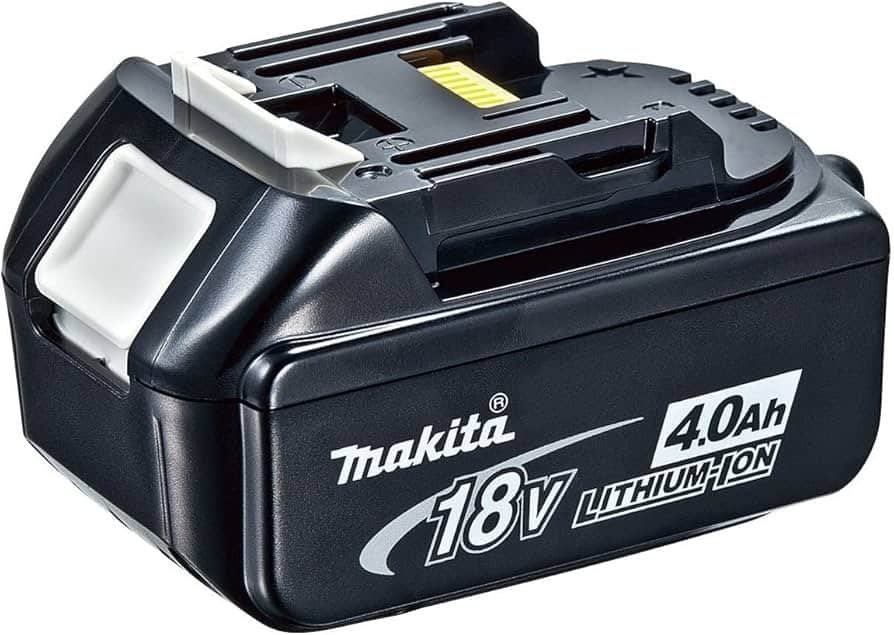
Best All-Round: Makita BL1850B 5.0Ah
The BL1850B strikes the best balance for multi-tool work. You’ll get 50–70 minutes of runtime across mixed tasks—sanding, cutting, scraping—on a single charge. That’s enough for a full morning of work without stopping to swap batteries. The weight is noticeable but manageable, and you’re paying a reasonable premium over the 3.0Ah for the extra capacity. If you’re rotating between multi-tool tasks throughout the day, this is the battery that won’t leave you stranded.

Buy Makita BL1850B on Amazon — 5.0Ah, 18V LXT
Best for Heavy Use: Makita BL1860B 6.0Ah
If you’re doing extended sanding or scraping jobs on hardwood, the BL1860B is worth considering. You’ll see 60–85 minutes of runtime and the tool won’t bog down even under sustained load. This is the choice if you’re running your multi-tool continuously for an hour or more. The trade-off is noticeable weight. On a tool you’re holding overhead or in awkward positions, that extra 1.0Ah of capacity adds tangible fatigue by the end of the day. Buy it only if extended runtime genuinely saves you charging time.

Buy Makita BL1860B on Amazon — 6.0Ah, 18V LXT
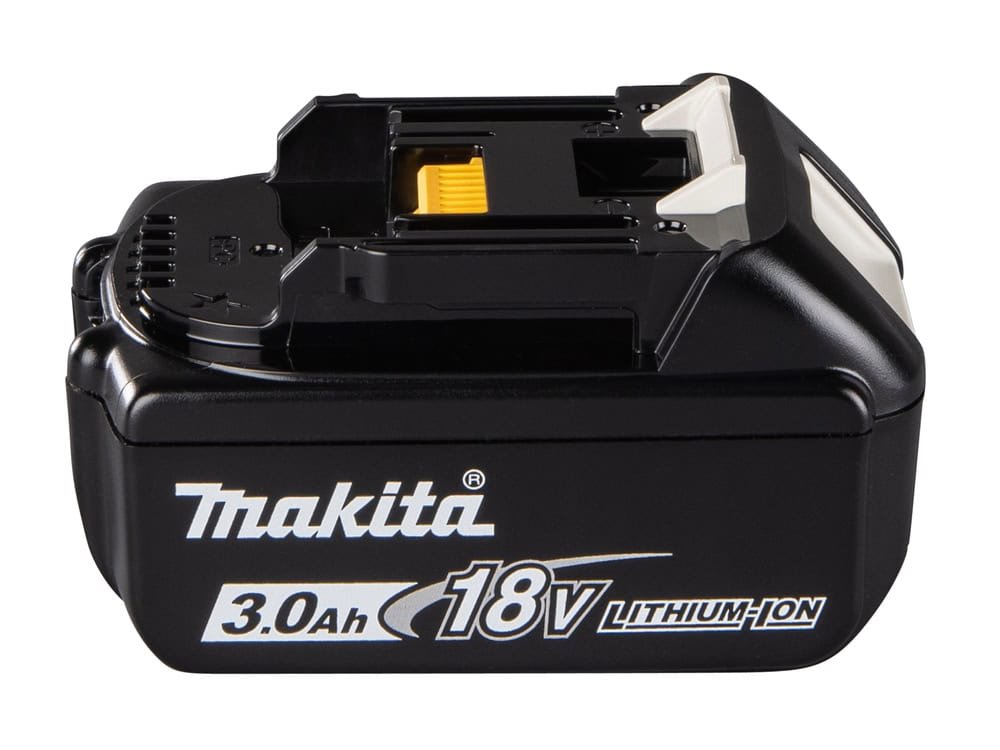
Best Lightweight: Makita BL1830 3.0Ah
The BL1830 is genuinely the sweet spot for most multi-tool users. You’ll get 30–45 minutes of sanding, cutting, or scraping, which is enough for most job-site applications. The weight is minimal—you’ll feel barely any difference between this and the bare tool. If you already own a couple of larger batteries for your drills and saws, this 3.0Ah is perfect for multi-tool duty. Most professionals use exactly this combination: small battery for light-duty tools, larger batteries for high-demand tools.

Buy Makita BL1830 on Amazon — 3.0Ah, 18V LXT
Explore all Makita 18V LXT batteries on the Makita 18V LXT Battery Compatibility page.
Best Batteries for DeWalt Multi-Tools
Best All-Round: DeWalt DCB205 5.0Ah
The DCB205 is the reliable workhorse for DeWalt multi-tool users. At 5.0Ah, you’ll see 50–70 minutes of mixed-task runtime. The compact profile keeps weight down compared to the 6.0Ah, and you’re not sacrificing much runtime for everyday work. The integrated fuel gauge on DeWalt batteries is reliable, so you always know where you stand on charge.

Buy DeWalt DCB205 on Amazon — 5.0Ah, 20V MAX
Best for Heavy Use: DeWalt DCB206 6.0Ah
The DCB206 extends your window to 60–80 minutes per charge. It’s the go-to if you’re sanding large areas or doing long scraping jobs. The 6.0Ah gives you the capacity to power through without interruption, but you’ll notice the weight more than on smaller tasks. Choose this if continuous runtime matters more than holding comfort.

Buy DeWalt DCB206 on Amazon — 6.0Ah, 20V MAX
Best Lightweight: DeWalt DCB204 4.0Ah
The DCB204 is an excellent choice if you want a balance between runtime and weight. You’ll get 35–50 minutes of multi-tool work per charge, and the battery feels noticeably lighter than the 5.0Ah. It’s the ideal companion for detail sanding, cutting corners, or finish work where control and fatigue matter more than absolute runtime.
Buy DeWalt DCB204 on Amazon — 4.0Ah, 20V MAX
See all compatible DeWalt 20V MAX batteries on the DeWalt 20V MAX Battery Compatibility page.
Best Batteries for Milwaukee Multi-Tools
Best All-Round: Milwaukee 48-11-1850 5.0Ah
The 48-11-1850 delivers 50–70 minutes of runtime and is the sensible all-rounder for Milwaukee multi-tool users. M18 batteries tend to feel more balanced in-hand than DeWalt equivalents, so the weight penalty is less noticeable. You’re getting full-day capability without excessive bulk.

Buy Milwaukee 48-11-1850 on Amazon — 5.0Ah, M18
Best for Heavy Use: Milwaukee 48-11-1860 6.0Ah
The 48-11-1860 is the choice when you’re doing production-level sanding or scraping. You’ll get 60–85 minutes per charge and the tool won’t slow down under continuous load. Milwaukee’s ergonomic design makes this the most comfortable 6.0Ah to hold of the three brands, though weight will still be a factor on overhead work. Buy it if your work genuinely demands extended uninterrupted runtime.

Buy Milwaukee 48-11-1860 on Amazon — 6.0Ah, M18
Best Lightweight: Milwaukee 48-11-1840 4.0Ah
The 48-11-1840 provides a smart middle ground: 35–50 minutes of runtime with weight that won’t wear you down on awkward positions. It’s the preferred choice for professionals who do a lot of detail sanding and corner cutting where tool control and fatigue matter as much as absolute runtime.
Buy Milwaukee 48-11-1840 on Amazon — 4.0Ah, M18
View all compatible Milwaukee M18 batteries on the Milwaukee M18 Battery Compatibility page.
Full Comparison Table
| Battery Model | Platform | Capacity | Best For | Buy Link |
|---|---|---|---|---|
| Makita BL1850B | 18V LXT | 5.0Ah | Mixed multi-tool tasks, full-day work | Buy |
| Makita BL1860B | 18V LXT | 6.0Ah | Extended sanding, continuous use | Buy |
| Makita BL1830 | 18V LXT | 3.0Ah | Light duty, detail work, minimal weight | Buy |
| DeWalt DCB205 | 20V MAX | 5.0Ah | Mixed multi-tool tasks, full-day work | Buy |
| DeWalt DCB206 | 20V MAX | 6.0Ah | Extended sanding, production work | Buy |
| DeWalt DCB204 | 20V MAX | 4.0Ah | Balanced weight and runtime, detail work | Buy |
| Milwaukee 48-11-1850 | M18 | 5.0Ah | Mixed multi-tool tasks, full-day work | Buy |
| Milwaukee 48-11-1860 | M18 | 6.0Ah | Extended sanding, high-demand continuous use | Buy |
| Milwaukee 48-11-1840 | M18 | 4.0Ah | Lightweight balance, detail sanding, control | Buy |
Frequently Asked Questions
Do cordless multi-tools drain batteries quickly?
Not compared to drills, saws, or angle grinders. Multi-tools are genuinely low-draw machines. A 5.0Ah battery will run a multi-tool for 50–70 minutes of continuous use. A 3.0Ah will give you 30–45 minutes. That’s good enough for most job-site tasks. If you’re switching between multiple tools, a 3.0Ah multi-tool battery paired with a larger battery for high-demand tools is a smart strategy.
What’s the best lightweight battery for multi-tools?
A 3.0–4.0Ah battery is genuinely the best choice if you’re doing detail work, overhead cutting, or finish sanding. The Makita BL1830 (3.0Ah), DeWalt DCB204 (4.0Ah), and Milwaukee 48-11-1840 (4.0Ah) all offer excellent runtime without the fatigue penalty of a 5.0Ah or 6.0Ah. Most professionals doing detail work stick with these sizes for multi-tools specifically.
Does sanding drain the battery faster than cutting?
Sanding demands slightly more sustained power than cutting, so yes. Grinding abrasives through wood or drywall pulls more current than oscillating through drywall or thin sheet. You might see a 10–15% reduction in runtime between light cutting and sustained sanding. Plan accordingly: if you’re doing 30 minutes of straight cutting, expect 25–27 minutes of continuous sanding on the same battery.
Can I use a larger battery on my multi-tool?
Absolutely. A 6.0Ah or larger battery will simply extend your runtime. The tool won’t perform better, but you’ll go longer without swapping batteries. The real question is whether the weight trade-off justifies the extended runtime for your specific work. Many professionals find that smaller batteries are actually better for multi-tools because control and fatigue matter more than absolute runtime.
How long do multi-tool batteries last?
Lithium-ion batteries in the 3.0–6.0Ah range deliver 2–3 years of regular use before noticeable degradation. If you’re using your multi-tool 2–3 times a week, expect 18–24 months of full capacity. Store batteries in a cool, dry place and avoid fully draining them on every use. Always allow batteries to cool before recharging if they’ve been under load for extended periods.