Best Batteries for Makita Nail Guns
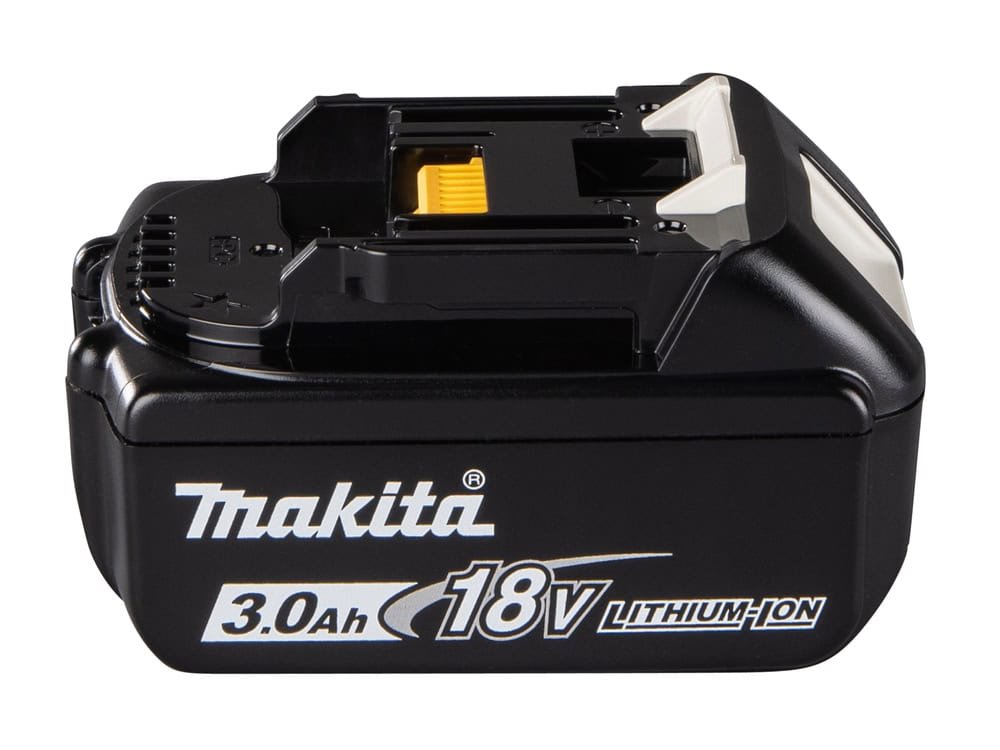
Makita BL1830 (3.0Ah) — Best Lightweight
For overhead nailling work, the BL1830 is the ideal battery. At 3.0Ah, you’ll fire roughly 500–700 nails before a swap. More importantly, the compact weight reduces arm fatigue on overhead tasks — a significant advantage when you’re hanging architrave or working on ceilings for hours. The trade-off is more frequent battery swaps, but most nailers carry spares anyway.


Model: BL1830
Makita BL1850B (5.0Ah) — Best All-Round
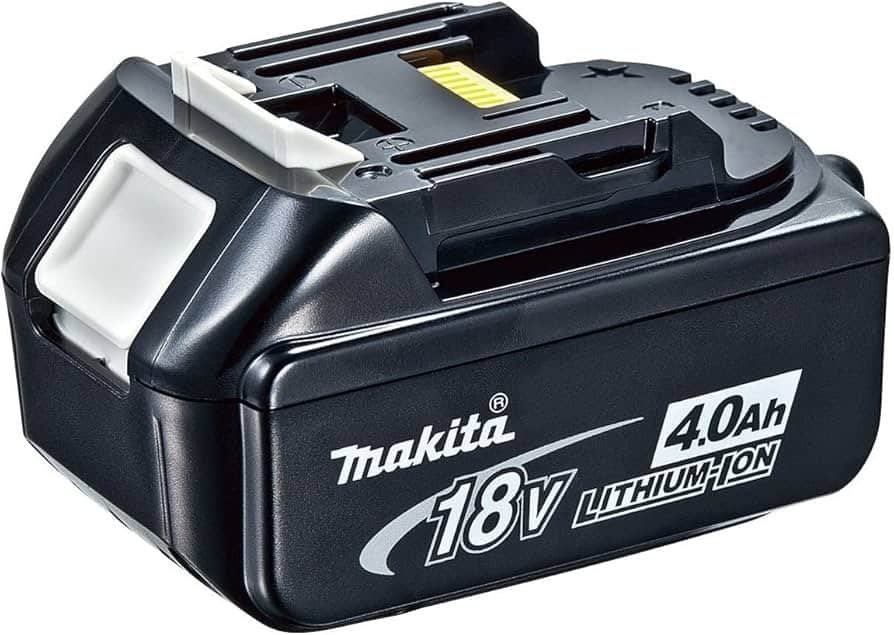
If you’re bulk-ordering frames or doing full-day finish work without overhead demands, the BL1850B keeps you productive. At 5.0Ah, you’ll fire 1,000–1,200 nails per battery. The extra weight is noticeable compared to the 3.0Ah, but if you’re working at waist height or on ground-level trim, it’s worth it to minimise battery swaps.

Model: BL1850B
Makita BL1860B (6.0Ah) — Best Extended Capacity
The BL1860B is overkill for most nailling work, but if you’re mass-producing assembled frames or doing a full-day bulk order, it delivers roughly 1,200–1,500 nails per battery. The increased weight makes it less suitable for overhead work, but for bench-height or ground-level nailling, it maximises productivity per charge.

Model: BL1860B
For more on all Makita 18V LXT batteries, see our Makita 18V LXT Battery Compatibility guide.
Best Batteries for DeWalt Nail Guns
DeWalt DCB204 (4.0Ah) — Best Lightweight
The DCB204 is a solid overhead choice for DeWalt nailer owners. At 4.0Ah, you’ll fire roughly 600–800 nails per battery. It’s slightly heavier than the smallest Makita pack, but DeWalt’s balanced design makes it comfortable for overhead work. This is the go-to for drywall hanging and architrave installation.
Model: DCB204
DeWalt DCB205 (5.0Ah) — Best All-Round
The DCB205 balances runtime and weight for general nailling work. At 5.0Ah, you’ll drive 1,000–1,200 nails before a swap. It’s the practical choice if you’re hanging frames, installing baseboards, or doing mixed nailling work throughout the day without constant overhead demands.

Model: DCB205
DeWalt DCB206 (6.0Ah) — Best Extended Capacity
For production nailling, the DCB206 delivers maximum runtime per battery. At 6.0Ah, you’ll achieve 1,200–1,500 nails before swapping. It’s a heavier tool overhead, but ideal for full-day bulk frame assembly or job sites where battery swaps break your rhythm.

Model: DCB206
Explore all DeWalt 20V MAX options in our DeWalt 20V MAX Battery Compatibility guide.
Best Batteries for Milwaukee Nail Guns
Milwaukee 48-11-1840 (4.0Ah) — Best Lightweight
The 48-11-1840 is Milwaukee’s lightweight choice for overhead nailling. At 4.0Ah, you’ll fire roughly 600–800 nails per battery. For drywall hanging, architrave, or ceiling trim work, the compact weight reduces arm fatigue significantly. Milwaukee’s ergonomic design makes even the heavier packs feel manageable, but this lightweight pack is still the comfort champion for overhead jobs.
Buy Milwaukee 48-11-1840 on Amazon
Model: 48-11-1840
Milwaukee 48-11-1850 (5.0Ah) — Best All-Round
The 48-11-1850 is the versatile option for general nailling tasks. At 5.0Ah, you’ll achieve 1,000–1,200 nails per battery. If you’re hanging frames, installing baseboards, or doing mixed-height nailling throughout a job, this battery balances runtime and weight effectively.

Buy Milwaukee 48-11-1850 on Amazon
Model: 48-11-1850
Milwaukee 48-11-1860 (6.0Ah) — Best Extended Capacity
For high-volume nailling, the 48-11-1860 keeps you productive. At 6.0Ah, you’ll fire 1,200–1,500 nails before a swap. If you’re assembling bulk frames or managing a large job site, the extended runtime justifies the extra weight — fewer pauses to swap batteries means better productivity.

Buy Milwaukee 48-11-1860 on Amazon
Model: 48-11-1860
See our complete Milwaukee M18 Battery Compatibility guide for all available options.
Full Comparison Table
| Battery | Platform | Capacity | Best For | Buy Link |
|---|---|---|---|---|
| BL1830 | Makita 18V LXT | 3.0Ah | Lightweight overhead work | Amazon |
| BL1850B | Makita 18V LXT | 5.0Ah | General frame & trim nailling | Amazon |
| BL1860B | Makita 18V LXT | 6.0Ah | Bulk frame assembly | Amazon |
| DCB204 | DeWalt 20V MAX | 4.0Ah | Lightweight overhead work | Amazon |
| DCB205 | DeWalt 20V MAX | 5.0Ah | General frame & trim nailling | Amazon |
| DCB206 | DeWalt 20V MAX | 6.0Ah | Bulk frame assembly | Amazon |
| 48-11-1840 | Milwaukee M18 | 4.0Ah | Lightweight overhead work | Amazon |
| 48-11-1850 | Milwaukee M18 | 5.0Ah | General frame & trim nailling | Amazon |
| 48-11-1860 | Milwaukee M18 | 6.0Ah | Bulk frame assembly | Amazon |
Frequently Asked Questions
How many nails can one battery drive?
On a 3.0–4.0Ah battery, expect 500–800 nails. On a 5.0Ah: 1,000–1,200 nails. On a 6.0Ah: 1,200–1,500 nails. These figures assume a fresh gas cartridge and efficient motor. Older cartridges or dull safeties may reduce output. Most finish nailers run dry long before the battery dies — it’s the cartridge, not the battery, that limits your shot count.
Do nailers really need big batteries?
No. Nailers are one of the lowest-draw tools you own. A 3.0Ah battery will drive hundreds of nails. The real question is comfort — overhead? Go lightweight. Bulk nailling on the ground? Go for capacity to minimise swaps. Power is never the limiting factor with cordless nailers.
What’s better for overhead work — lightweight or high capacity?
Lightweight wins for overhead. A 3.0–4.0Ah battery reduces arm fatigue dramatically when you’re working at arm’s length. You’ll swap batteries more often, but most nailers carry 2–3 spares charged anyway. The comfort gain is worth more battery swaps on overhead jobs.
How long will a nail gun battery last?
A typical finish nailer runs for 1–2 hours per battery depending on shot volume and cartridge condition. If you’re firing 20 nails per minute continuously, a 5.0Ah lasts roughly 1 hour. In real site work (intermittent firing), runtime stretches to 2–3 hours. The gap cartridge depletes much faster than the battery in typical work.
Can I use Makita batteries in DeWalt or Milwaukee nailers?
No. Each platform uses proprietary connectors. You must use Makita 18V LXT batteries for Makita tools, DeWalt 20V MAX for DeWalt tools, and Milwaukee M18 for Milwaukee tools. See our cross-compatibility FAQ for more details on adapters and workarounds.
What’s the difference between gas and battery nailers?
Gas cartridge nailers are slightly more powerful and reliable on dusty sites, but require fuel cartridges and maintenance. Battery nailers eliminate cartridge costs and are quieter. Battery-powered finish nailers (18–20V platforms) are now competitive with gas on most jobs. The battery is your choice — go lightweight for overhead, heavier for bulk work.