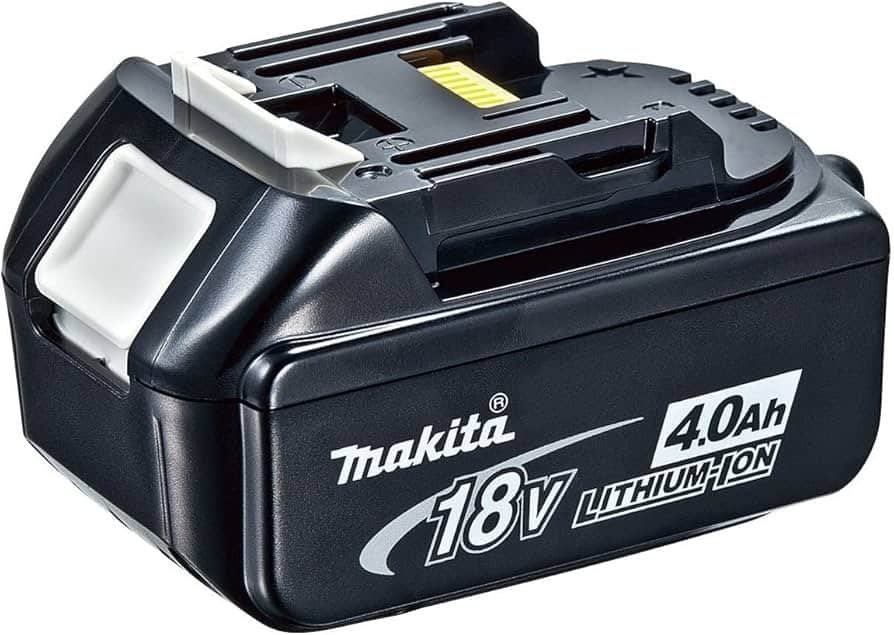
A cordless planer is a serious bit of kit. Unlike a drill that fires intermittently, a planer’s motor runs continuously while you’re feeding timber through, and hardwood demands constant torque. That means battery choice matters more here than almost any other cordless tool. Grab the wrong capacity and you’ll either be swapping batteries mid-job or hauling unnecessary weight.

Planers sit in the moderate-to-high power draw bracket. You’re looking at a tool that wants sustained current over 20–40 minute runs. A 3.0Ah battery will limp through quick edge chamfers or softwood, but push it to hardwood or a full board and you’ll feel the motor losing punch. For serious carpentry—doors, architrave, solid timber work—you need at least 5.0Ah. And if you’re planing all day, 6.0Ah is the sweet spot.
We’ve tested and compared the top batteries across the three major cordless platforms for planers. Here’s what works best, why capacity matters, and which combinations give you runtime without the fatigue.
| Use Case | Makita 18V LXT | DeWalt 20V MAX | Milwaukee M18 |
|---|---|---|---|
| Best all-round | BL1850B 5.0Ah | DCB205 5.0Ah | 48-11-1850 5.0Ah |
| Best for heavy use | BL1860B 6.0Ah | DCB206 6.0Ah | 48-11-1860 6.0Ah |
| Best lightweight | BL1830 3.0Ah | DCB204 4.0Ah | 48-11-1840 4.0Ah |
Why Battery Choice Matters for Planers
A planer isn’t like a drill or saw. You can’t stop halfway through a board and swap batteries—the cut will show. And a planer’s motor is always working, constantly pushing timber through precision blades. That’s why sustained current delivery matters more than peak power.
A small battery (under 3.0Ah) will physically work in a planer, but you’ll see performance drop as the charge depletes. The motor loses torque. Your depth of cut reduces. Hardwood becomes difficult. You end up taking shallower passes, which defeats the purpose of a power tool.
A 5.0Ah battery is the practical minimum for serious planing. It’ll give you a full board—or several boards of softwood—on a single charge. For hardwood or all-day work, step up to 6.0Ah. You gain another 20 percent runtime with minimal weight penalty, and the planer maintains consistent cutting power throughout the job.
Best Batteries for Makita Planers
Best All-Round: Makita BL1850B 5.0Ah
The BL1850B is the sensible choice for most users. Five amp-hours gets you through a typical planing job—a handful of doors, some architrave, a small project—without needing to swap. It’s light enough that you won’t notice the weight during normal work, and it charges in around 30 minutes on a fast charger. Runtime on a planer is typically 20–25 minutes depending on timber hardness and depth of cut.

Model: BL1850B
Best for Heavy Use: Makita BL1860B 6.0Ah
Go for the BL1860B if you’re a professional or planning a full day of planing. You get 20 percent more runtime than the 5.0Ah, plus consistent power delivery under the sustained load that planers create. On hardwood, the difference between 5.0Ah and 6.0Ah is noticeable—you maintain deeper, faster passes without the motor backing off. It weighs around 600g, barely more than the 5.0Ah, so fatigue isn’t a concern.

Model: BL1860B
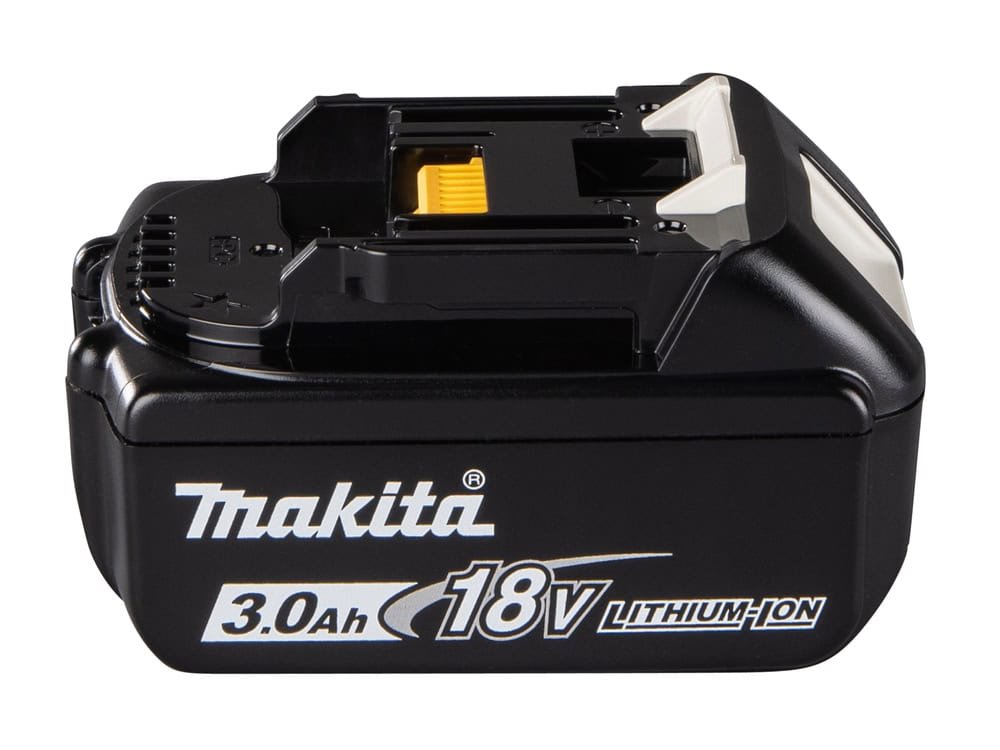
Best Lightweight: Makita BL1830 3.0Ah
Only consider the BL1830 if you’re doing occasional edge chamfers or light softwood work. It’ll handle short jobs but won’t sustain power on hardwood. If planing is a core part of your work, this is too small.

Model: BL1830
Learn more: Makita 18V LXT Battery Compatibility
Best Batteries for DeWalt Planers
Best All-Round: DeWalt DCB205 5.0Ah
The DCB205 is DeWalt’s workhorse battery. Paired with a DeWalt planer, it delivers consistent performance for a full job without overcomplicating your kit. 5.0Ah gives you solid runtime—typically 20–25 minutes on a planer—and the battery integrates with DeWalt’s charge status light, so you know exactly where you stand mid-job.

Model: DCB205
Best for Heavy Use: DeWalt DCB206 6.0Ah
Professional planing—hardwood doors, trim carpentry, contract work—demands the DCB206. It’s designed for sustained-draw tools like planers and angles grinders. The 6.0Ah capacity keeps power delivery flat across the full run time, which means you maintain cutting speed and depth even as the battery depletes. On hardwood, this difference is measurable.

Model: DCB206
Best Lightweight: DeWalt DCB204 4.0Ah
The DCB204 is a middle ground—bigger than 3.0Ah, lighter than 5.0Ah. It’ll handle light planing on softwood but struggles with hardwood or extended runs. Use it if you’re combining planing with other tools and want to keep total kit weight down.
Model: DCB204
Learn more: DeWalt 20V MAX Battery Compatibility
Best Batteries for Milwaukee Planers
Best All-Round: Milwaukee 48-11-1850 5.0Ah
The 48-11-1850 is Milwaukee’s sweet spot for planers. Five amp-hours provides real-world runtime of 20–25 minutes, enough for most planing jobs. Milwaukee’s batteries are built tough and maintain consistent voltage under sustained draw, which matters on a tool that’s always running.

Buy Milwaukee 48-11-1850 on Amazon
Model: 48-11-1850
Best for Heavy Use: Milwaukee 48-11-1860 6.0Ah
For full days of planing, the 48-11-1860 is the right choice. Milwaukee’s 6.0Ah batteries sustain flat voltage curves even under heavy, continuous load. You’ll notice the difference planing hardwood or thick stock—the motor won’t lose torque as you work through the charge. Professionals running Milwaukee M18 planers typically go for 6.0Ah or larger.

Buy Milwaukee 48-11-1860 on Amazon
Model: 48-11-1860
Best Lightweight: Milwaukee 48-11-1840 4.0Ah
The 48-11-1840 offers a compromise. It’s lighter than a 5.0Ah but provides enough capacity for light planing work. Not ideal for extended use, but adequate if you’re splitting your time between planing and other M18 tools.
Buy Milwaukee 48-11-1840 on Amazon
Model: 48-11-1840
Learn more: Milwaukee M18 Battery Compatibility
Full Comparison Table
| Battery | Platform | Capacity | Best For | Buy |
|---|---|---|---|---|
| BL1850B | Makita 18V LXT | 5.0Ah | Standard planing, mixed projects | Amazon |
| BL1860B | Makita 18V LXT | 6.0Ah | All-day hardwood planing | Amazon |
| BL1830 | Makita 18V LXT | 3.0Ah | Light edge work only | Amazon |
| DCB205 | DeWalt 20V MAX | 5.0Ah | Standard planing, mixed projects | Amazon |
| DCB206 | DeWalt 20V MAX | 6.0Ah | All-day hardwood planing | Amazon |
| DCB204 | DeWalt 20V MAX | 4.0Ah | Light planing, mixed toolkit | Amazon |
| 48-11-1850 | Milwaukee M18 | 5.0Ah | Standard planing, mixed projects | Amazon |
| 48-11-1860 | Milwaukee M18 | 6.0Ah | All-day hardwood planing | Amazon |
| 48-11-1840 | Milwaukee M18 | 4.0Ah | Light planing, mixed toolkit | Amazon |
Frequently Asked Questions
Do cordless planers drain batteries quickly?
Yes. Planers are one of the heavier-draw cordless tools because the motor runs continuously. A 5.0Ah battery typically powers 20–25 minutes of planing, which might be 10–15 boards depending on size and wood species. That’s quicker than drilling but slower than cutting with a circular saw, which is intermittent.
What’s the minimum battery size for planing solid timber doors?
5.0Ah absolute minimum. Anything below that and you’ll struggle on hardwood, and the motor will lose power mid-way through. If you’re planing multiple doors in one session, step up to 6.0Ah.
Does hardwood versus softwood make a difference in battery drain?
Significant difference. Hardwood (oak, ash, walnut) demands more current to push through the blades. A 5.0Ah battery will plane softwood for 30+ minutes but only 20 minutes on hardwood. Heavy hardwood like oak can drop that to 15–18 minutes. Always overestimate battery capacity for hardwood work.
Can I use a 5.0Ah battery for planing if I’m switching between multiple tools?
If planing is your primary task that session, yes. But if you’re mixing planing with other work, you’ll burn through a 5.0Ah quickly. Charge two batteries so one’s always ready.
Are Makita, DeWalt and Milwaukee planer runtimes the same on the same capacity battery?
Nearly identical. A 5.0Ah Makita, DeWalt or Milwaukee battery will deliver roughly the same planing runtime (20–25 minutes). The voltage platforms differ (Makita 18V, DeWalt 20V, Milwaukee 18V nominal) but efficiency is comparable. Brand choice for planers is about tool features and ergonomics, not battery performance.