Cordless SDS drills are among the most demanding tools on any 18V battery platform. Drilling into concrete, masonry, and stone requires sustained high current draw, and the hammer mechanism adds further load. Get the battery wrong and you’ll be swapping packs after a handful of holes. Get it right and you can anchor a full wall of fixings on a single charge.

Below we compare the best battery options for SDS drills across Makita 18V LXT, DeWalt 20V MAX, and Milwaukee M18.
Quick Recommendations
| Use Case | Makita 18V LXT | DeWalt 20V MAX | Milwaukee M18 |
|---|---|---|---|
| Best all-round | BL1850B (5.0Ah) | DCB205 (5.0Ah) | 48-11-1850 (5.0Ah) |
| Best for heavy use | BL1860B (6.0Ah) | DCB206 (6.0Ah) | 48-11-1860 (6.0Ah) |
| Best lightweight | BL1830 (3.0Ah) | DCB204 (4.0Ah) | 48-11-1840 (4.0Ah) |
Why Battery Choice Matters for SDS Drills
SDS drills pull heavy current — typically 600–800W equivalent under load. The pneumatic hammer mechanism adds significant power draw on top of the rotary motor. A 3.0Ah battery might only last 10–15 minutes of continuous drilling into concrete, while a 6.0Ah can stretch that to 30–40 minutes.
Our strong recommendation: 5.0Ah minimum for any serious SDS work. If you’re drilling more than a few holes, 6.0Ah is worth the extra weight every time. Keep a 3.0Ah as backup only.
Best Batteries for Makita SDS Drills
Makita’s 18V LXT powers SDS drills like the DHR242Z and compact DHR183Z.
Makita BL1850B — Best All-Round (5.0Ah)
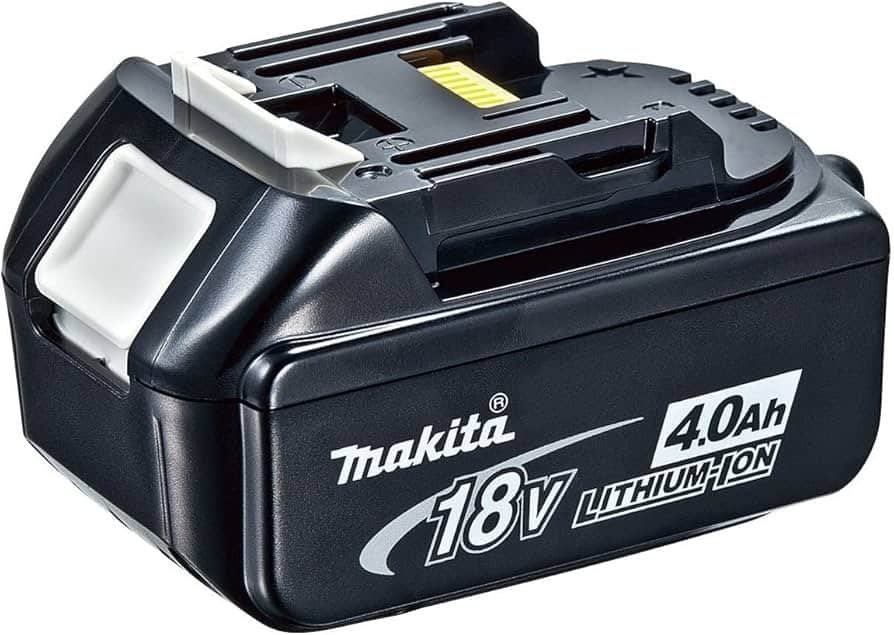
The BL1850B gives you 20–30 minutes of SDS drilling into concrete — enough for 15–20 anchor holes in a typical session. It’s the minimum we’d recommend for regular SDS work.

Makita BL1860B — Best for Heavy Use (6.0Ah)
The BL1860B is the default choice for SDS work. You’ll get 30–40 minutes of drilling and the higher capacity means the battery maintains voltage better under the extreme loads SDS drilling demands.

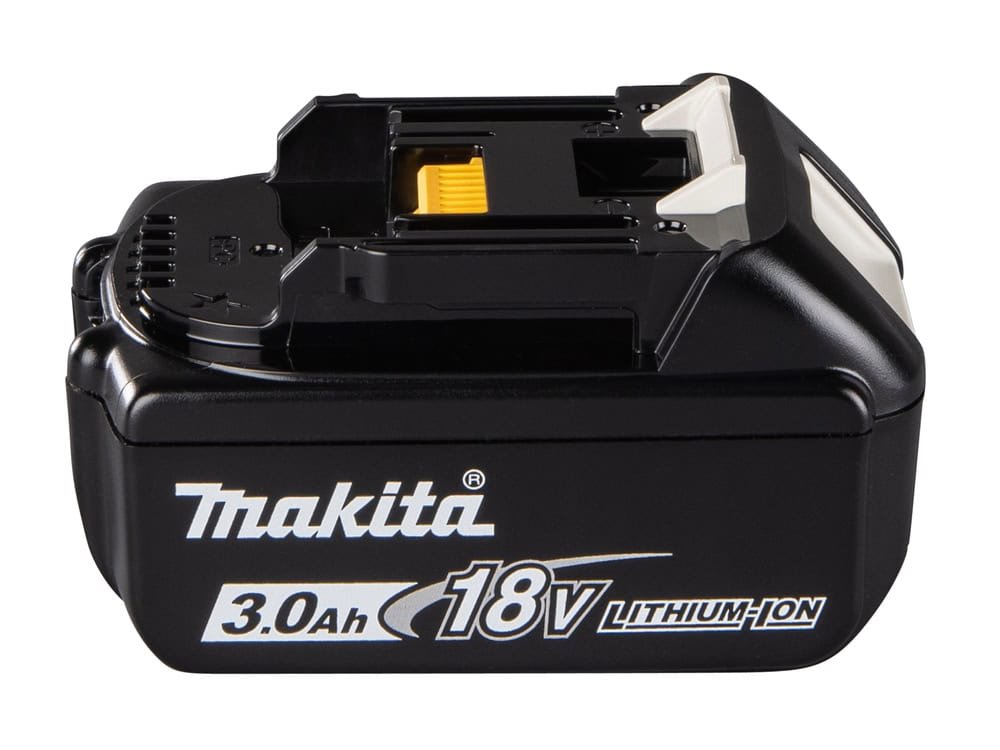
Makita BL1830 — Best Lightweight (3.0Ah)
The BL1830 is only suitable for occasional light anchoring. Expect 10–15 minutes before it’s flat. Keep it as an emergency spare, not a primary SDS battery.

Best Batteries for DeWalt SDS Drills
DeWalt’s 20V MAX range includes the DCH273 SDS Plus rotary hammer.
DeWalt DCB205 — Best All-Round (5.0Ah)
The DCB205 delivers 20–25 minutes of concrete drilling. Adequate for moderate anchoring jobs but you’ll want a spare on the charger for bigger tasks.

DeWalt DCB206 — Best for Heavy Use (6.0Ah)
The DCB206 is the recommended default for SDS work on the DeWalt platform. The extra capacity means fewer swaps during installation jobs. FLEXVOLT batteries also work and provide even longer runtime.

DeWalt DCB204 — Best Lightweight (4.0Ah)
The DCB204 is lighter but drains fast under SDS load. Only reach for this if you’re drilling a handful of holes in blockwork, not sustained masonry work.
Best Batteries for Milwaukee SDS Drills
Milwaukee’s M18 platform includes the M18 FH 4-mode SDS Plus hammer and the compact M18 CHX.
Milwaukee 48-11-1850 — Best All-Round (5.0Ah)
The 48-11-1850 provides enough juice for a moderate SDS session. Milwaukee’s FUEL motor efficiency helps extract maximum runtime from each charge.

Buy Milwaukee 48-11-1850 on Amazon
Milwaukee 48-11-1860 — Best for Heavy Use (6.0Ah)
The 48-11-1860 High Output battery is purpose-built for high-demand tools like SDS drills. It delivers sustained current without voltage sag, keeping the hammer mechanism punching consistently.

Buy Milwaukee 48-11-1860 on Amazon
Milwaukee 48-11-1840 — Best Lightweight (4.0Ah)
The 48-11-1840 is a compromise for SDS work — lighter, but limited runtime. Use for occasional anchoring only.
Buy Milwaukee 48-11-1840 on Amazon
Full Comparison Table
| Battery | Platform | Capacity | Best For | Buy Link |
|---|---|---|---|---|
| Makita BL1850B | 18V LXT | 5.0Ah | Moderate SDS work | Amazon |
| Makita BL1860B | 18V LXT | 6.0Ah | Heavy concrete drilling | Amazon |
| Makita BL1830 | 18V LXT | 3.0Ah | Emergency spare only | Amazon |
| DeWalt DCB205 | 20V MAX | 5.0Ah | Moderate SDS work | Amazon |
| DeWalt DCB206 | 20V MAX | 6.0Ah | Heavy concrete drilling | Amazon |
| DeWalt DCB204 | 20V MAX | 4.0Ah | Light anchoring | Amazon |
| Milwaukee 48-11-1850 | M18 | 5.0Ah | Moderate SDS work | Amazon |
| Milwaukee 48-11-1860 | M18 | 6.0Ah | Heavy concrete drilling | Amazon |
| Milwaukee 48-11-1840 | M18 | 4.0Ah | Occasional anchoring | Amazon |
Frequently Asked Questions
What’s the minimum battery for SDS drilling?
We recommend 5.0Ah minimum for any regular SDS work. A 3.0Ah will physically work but drains in 10–15 minutes of concrete drilling. For serious installation work, 6.0Ah is the better choice.
How many holes can I drill per charge?
With a 5.0Ah battery drilling 8mm holes into concrete, expect roughly 15–25 holes per charge. A 6.0Ah stretches that to 20–30 holes. Larger diameter holes and harder materials reduce this significantly.
Should I use 18V or 36V for SDS drilling?
For standard SDS Plus drilling (up to 24–28mm diameter), 18V is adequate. For SDS Max or drilling above 28mm into hard concrete, consider a 36V tool (Makita XGT, DeWalt FLEXVOLT, or Milwaukee MX FUEL) for better performance and runtime.
Can I use FLEXVOLT batteries in a DeWalt 20V MAX SDS drill?
Yes. FLEXVOLT batteries are backward compatible and will run at 20V in a 20V MAX SDS drill, providing excellent runtime. See our DeWalt compatibility guide.
Do High Output batteries make a difference for SDS drills?
Yes. High Output batteries (like Milwaukee’s 48-11-1860) deliver higher sustained current, which means less voltage sag under the extreme loads SDS drilling creates. The hammer mechanism punches more consistently and the tool feels more powerful throughout the charge.