Multi-Tool Blade Types — Which Blade for Which Job?
Oscillating multi-tools are one of the most versatile power tools you can own, but that versatility depends entirely on having the right blade. Different blade types are designed for different materials and applications — using the wrong one means poor results, slow cutting, and premature blade wear. This guide covers every major multi-tool blade type and explains exactly when to use each one.
Wood Cutting Blades
Wood cutting is the most common use for oscillating multi-tools, and there are several blade designs to choose from depending on the job.
| Blade Type | TPI | Material | Best For | Example Use |
|---|---|---|---|---|
| Standard plunge cut | 10–14 | HCS (high carbon steel) | Softwood, MDF, plasterboard | Cutting access holes in drywall, trimming door frames |
| Bi-metal plunge cut | 14–18 | Bi-metal (HSS + spring steel) | Wood with nails/screws, hardwood | Demolition work, cutting through embedded nails |
| Japanese tooth (aggressive) | 6–10 | Hardened steel | Fast ripping in hardwood | Framing cuts, structural timber |
| Wide plunge cut (65mm+) | 10–14 | HCS or bi-metal | Wide cuts in sheet materials | Cutting large openings in MDF, worktops |
| Flush cut (side-cutting) | 12–16 | Bi-metal | Cutting flush to adjacent surfaces | Removing skirting boards, trimming mouldings |
Tip: For general-purpose wood cutting, a 32mm bi-metal plunge cut blade is the most versatile single blade you can own. It handles wood, nails, plastic, and thin metal. The Bosch Starlock AIZ 32 APB is one of the best-selling options in the UK.
Metal Cutting Blades
Multi-tools aren’t primary metal-cutting tools, but they excel at cutting in tight spaces where angle grinders or reciprocating saws can’t reach.
| Blade Type | TPI | Material | Best For | Example Use |
|---|---|---|---|---|
| Standard metal cutting | 18–32 | Bi-metal | Soft metals, aluminium, copper | Cutting copper pipe, HVAC ducts, metal trim |
| Carbide-tipped metal | 14–24 | Carbide-welded teeth | Hard metals, stainless steel, bolts | Cutting seized bolts, stainless pipe, hardened fasteners |
| Fine metal (thin gauge) | 28–32 | Bi-metal | Thin-wall tubing, precision work | Plumbing work, cutting thin sheet metal without distortion |
Tip: Standard bi-metal blades handle most metal-cutting tasks. Only step up to carbide-tipped for genuinely hard metals like stainless steel or hardened bolts — carbide blades cost significantly more but last much longer on tough materials.
Grout and Tile Blades
Grout removal is one of the tasks where oscillating multi-tools genuinely outperform every other tool. The right blade makes the difference between clean grout removal and cracked tiles.
| Blade Type | Coating | Best For | Example Use |
|---|---|---|---|
| Carbide-grit segment | Carbide particles | Grout removal, fiberglass, cement board | Removing grout between tiles without damaging tiles |
| Diamond-grit segment | Diamond particles | Porcelain, ceramic, granite, stone | Precision cuts in porcelain tile, stone work |
| Semicircular carbide | Carbide particles | Grout lines in tight corners | Grout removal with tight tolerance near edges |
Tip: Use carbide-grit for standard grout removal and diamond-grit only for hard materials like porcelain or natural stone. Diamond blades cost 3–5x more than carbide but are essential for avoiding chips and cracks in hard tile.
Sanding Pads
Most multi-tools accept triangular sanding pads via a hook-and-loop (Velcro) base. The triangular shape makes them ideal for getting into corners and tight spaces that orbital sanders can’t reach.
| Grit | Classification | Best For |
|---|---|---|
| 40–60 | Coarse | Paint stripping, rust removal, heavy material removal |
| 80–120 | Medium | General smoothing, surface preparation before painting |
| 180–240 | Fine | Final finishing before stain, varnish, or paint |
Note: Sanding pads are generally more universal than cutting blades — most brands use a similar triangular base with hook-and-loop attachment. However, always check that the pad size matches your tool’s sanding plate.
Scraper Blades
Scraper attachments turn your multi-tool into an aggressive adhesive and coating removal machine.
| Blade Type | Rigidity | Best For | Example Use |
|---|---|---|---|
| Rigid scraper | Stiff | Hard adhesives, paint, tile adhesive | Removing vinyl flooring, scraping tile adhesive |
| Flexible scraper | Bendable | Caulk, silicone, soft adhesives | Removing old bathroom sealant, gasket cleanup |
| Carbide scraper | Very stiff | Stubborn adhesive, epoxy, thinset | Removing epoxy residue, hardened thinset mortar |
Choosing the Right Blade — Quick Reference
| I Need To… | Blade Type | Key Spec |
|---|---|---|
| Cut wood (general) | Bi-metal plunge cut 32mm | 14–18 TPI |
| Cut wood with nails | Bi-metal plunge cut | 14–18 TPI, bi-metal essential |
| Cut copper pipe | Metal cutting blade | 18+ TPI |
| Cut hardened steel | Carbide-tipped metal blade | 14–24 TPI |
| Remove grout | Carbide-grit segment | Semicircular or segment shape |
| Cut porcelain tile | Diamond-grit blade | Diamond essential for hard tile |
| Sand corners | Triangular sanding pad | 80–120 grit for general use |
| Remove old sealant | Flexible scraper | Bendable blade |
| Remove tile adhesive | Rigid or carbide scraper | Stiff blade |
| Trim door frame | Flush cut / side-cutting blade | 12–16 TPI |
Recommended Multi-Tool Blade Sets
If you’re looking to stock up on blades, these multi-packs give you a good range of blade types for different materials — saving you money versus buying individual blades.
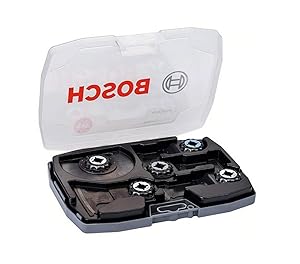
Bosch Starlock Multi-Tool Set
Best for Bosch & Fein Starlock tools — includes wood, metal, and sanding accessories.

Bosch Expert MetalMax AIZ 32
Top-rated carbide blade for cutting metal, nails, and screws — lasts up to 30x longer than standard blades.
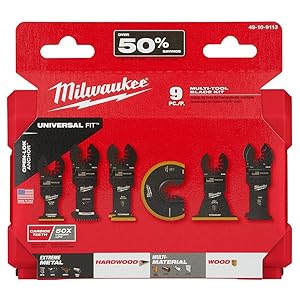
Milwaukee OPEN-LOK Blade Set
Premium blade set for Milwaukee multi-tools — includes wood, metal, and scraping blades.
As an Amazon Associate, we earn from qualifying purchases.