Can you use a Makita battery in a DeWalt tool? Will a Milwaukee M18 pack fit a Ryobi drill? If you’ve ever stared at two identical-looking 18V batteries and wondered why one won’t slot into the other brand’s tool, you’re not alone. Every major cordless tool manufacturer uses proprietary connectors — even when the voltage is the same — which means cross-brand battery swaps don’t work without an adapter.
This power tool battery compatibility chart cuts through the confusion. Below you’ll find a complete, brand-by-brand breakdown of which batteries work with which tools, which platforms are cross-compatible within the same brand, and where adapters can bridge the gap between different ecosystems.
Browse Power Tool Batteries on Amazon
Quick Answer: Are Power Tool Batteries Interchangeable?
No — power tool batteries are not interchangeable between brands. Each manufacturer (Makita, DeWalt, Milwaukee, Ryobi, Bosch, etc.) uses unique connector designs, locking tabs, and electronic communication protocols. A Makita 18V LXT battery will not physically fit a Milwaukee M18 tool, even though both run at 18 volts.
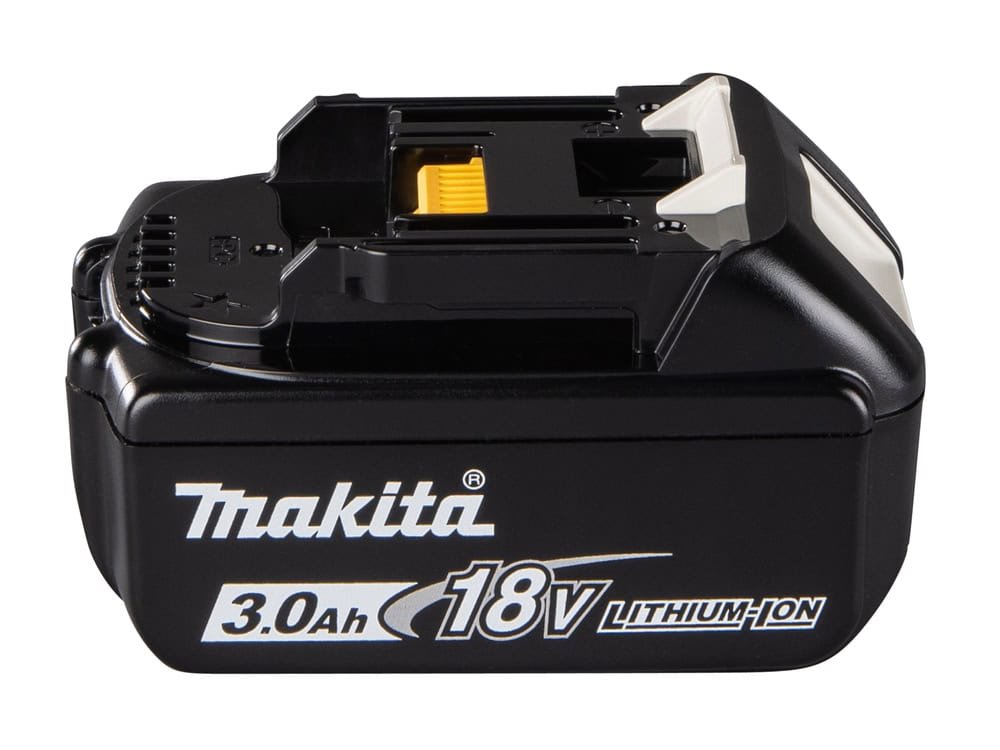
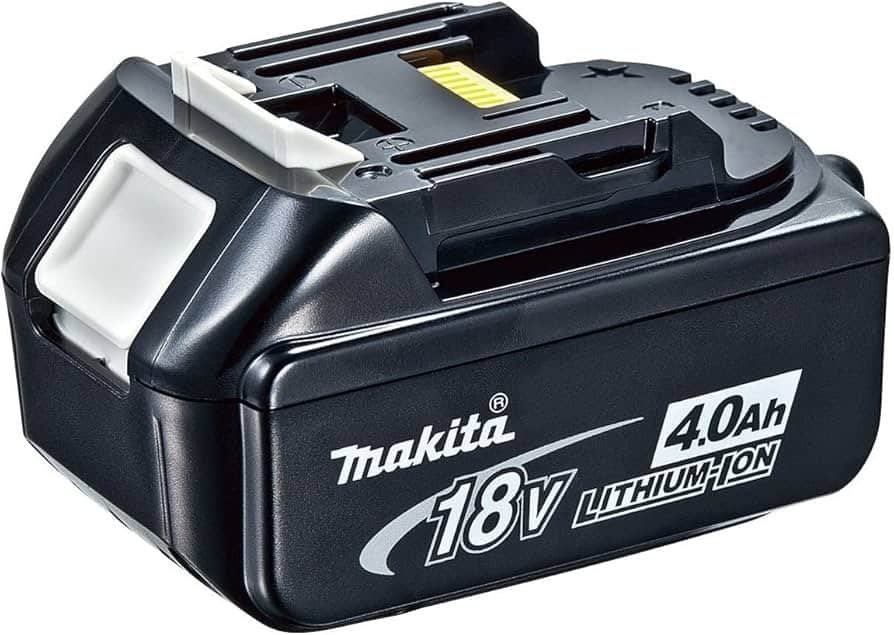
However, batteries are almost always interchangeable within the same brand and voltage platform. A Makita BL1850B (5.0Ah) fits every single Makita 18V LXT tool — from drills to circular saws to angle grinders. The same applies to DeWalt 20V MAX, Milwaukee M18, Ryobi ONE+, and every other platform listed below.
The one exception is battery adapters — third-party devices that let you physically connect one brand’s battery to another brand’s tool. We cover these in detail in our adapter guide.
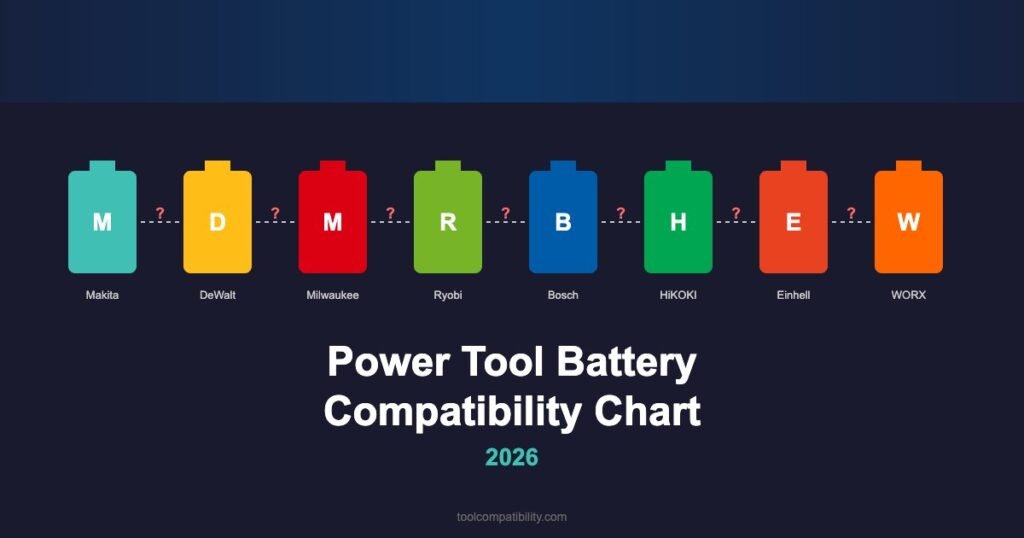
Master Compatibility Chart: Every Major Brand
This chart shows within-brand compatibility across every major cordless power tool platform available in the UK. Green means direct compatibility, amber means partial or adapter-required, and red means not compatible.
| Brand | Platform | Voltage | Compatible With | Not Compatible With | Tools in System |
|---|---|---|---|---|---|
| Makita | 18V LXT | 18V | All Makita 18V LXT tools (300+) | Makita 40V XGT, Makita G-Series, all other brands | 300+ |
| Makita | 40V Max XGT | 40V | All Makita 40V XGT tools | Makita 18V LXT, Makita G-Series, all other brands | 90+ |
| Makita | 18V G-Series | 18V | Makita G-Series tools only | Makita 18V LXT (different connectors), all other brands | Limited |
| DeWalt | 20V MAX | 20V (18V nominal) | All DeWalt 20V MAX tools, FLEXVOLT batteries work in 20V MAX tools | Old DeWalt 18V NiCad (without DCA1820 adapter), all other brands | 300+ |
| DeWalt | FLEXVOLT | 20V/60V | FLEXVOLT tools (at 60V) AND all 20V MAX tools (at 20V) | Old DeWalt 18V NiCad, all other brands | 40+ |
| Milwaukee | M18 | 18V | All Milwaukee M18 tools (250+) | Milwaukee M12, all other brands | 250+ |
| Milwaukee | M12 | 12V | All Milwaukee M12 tools (100+) | Milwaukee M18, all other brands | 100+ |
| Ryobi | ONE+ 18V | 18V | All Ryobi ONE+ tools (200+ spanning back to 1996) | Ryobi 40V, all other brands | 200+ |
| Ryobi | 40V | 40V | All Ryobi 40V tools | Ryobi ONE+ 18V, all other brands | 50+ |
| Bosch | 18V Professional | 18V | All Bosch Professional (Blue) 18V tools, AMPShare/CAS partners | Bosch Green/DIY range, all other non-CAS brands | 100+ |
| HiKOKI | Multi Volt | 18V/36V | All HiKOKI 18V tools (at 18V) and 36V tools (at 36V) | All other brands | 120+ |
| Einhell | Power X-Change | 18V | All Einhell 18V PXC tools (80+) | All other brands | 80+ |
| Parkside | 20V (Lidl) | 20V | All Parkside 20V tools, some Parkside X20V Team tools | All other brands | 60+ |
| WORX | PowerShare 20V | 20V | All WORX 20V tools | All other brands | 75+ |
| Stanley/B&D | 20V MAX | 20V | Stanley FatMax, Black & Decker, Porter-Cable, Craftsman V20 (shared platform) | DeWalt 20V MAX (despite same parent company), all other brands | 150+ |
For detailed tool-by-tool compatibility lists, tap any brand name below to visit its full platform guide.
Brand-by-Brand Compatibility Guides
Each guide below covers every compatible battery, charger, and tool in the system — with model numbers, specs, and buying links.
Makita
Makita runs three separate battery platforms, and they are not cross-compatible with each other. The 18V LXT system is by far the largest, with over 300 tools. The newer 40V Max XGT is Makita’s high-power platform for demanding applications. The budget G-Series uses a different 18V connector and is not compatible with LXT despite sharing the same voltage.
Makita 18V LXT Compatibility Guide | Makita 40V XGT Compatibility Guide | Makita G-Series Guide
DeWalt
DeWalt has one of the cleverest compatibility systems in the industry. All 20V MAX batteries fit all 20V MAX tools. Where it gets interesting is FLEXVOLT — these batteries automatically switch between 20V and 60V depending on the tool. A FLEXVOLT 60V battery will work perfectly in a standard 20V MAX drill (running at 20V), but a standard 20V MAX battery won’t power a 60V FLEXVOLT tool. Think of FLEXVOLT as backwards-compatible but not forwards-compatible.
If you have old DeWalt 18V NiCad tools, the DCA1820 adapter lets you use 20V MAX batteries in them — a much cheaper option than replacing your entire kit.
DeWalt 20V MAX Compatibility Guide | DeWalt FLEXVOLT Compatibility Guide
Milwaukee
Milwaukee runs two completely separate systems: M18 (18V) and M12 (12V). They do not cross over — you cannot use an M18 battery in an M12 tool or vice versa. The M18 platform is one of the largest in the industry with 250+ tools, including the professional-grade M18 FUEL range. M12 is designed for compact, one-handed tools.
Milwaukee M18 Compatibility Guide | Milwaukee M12 Compatibility Guide
Ryobi
Ryobi ONE+ has the best backwards compatibility of any brand. An 18V battery bought today will work in a Ryobi ONE+ tool from 1996 — that’s nearly 30 years of compatibility. The ONE+ system spans over 200 tools including power tools, garden tools, cleaning tools, and even inflators. The separate 40V system covers more powerful garden equipment.
Ryobi ONE+ 18V Compatibility Guide | Ryobi 40V Compatibility Guide
Bosch, HiKOKI & the CAS Alliance
Bosch Professional (Blue) 18V tools are part of the Cordless Alliance System (CAS) — a partnership where multiple brands share the same battery connector. CAS partners currently include Bosch, Fein, AMPShare-compatible brands, and others. This means a Bosch Professional 18V battery can power tools from CAS partner brands, and vice versa. This is the closest thing to true cross-brand compatibility in the industry.
Important: Bosch Green (DIY) batteries use a completely different connector to Bosch Blue (Professional). They are not interchangeable.
HiKOKI (formerly Hitachi) uses a clever Multi Volt system where the same battery delivers 18V or 36V depending on the tool — similar in concept to DeWalt’s FLEXVOLT.
CAS Alliance Compatibility Guide | HiKOKI Multi Volt Guide
Einhell, Parkside, WORX & More
Budget and mid-range brands each run their own closed ecosystems:
Einhell Power X-Change covers 80+ tools at 18V and is popular for DIY use across Europe. Parkside (Lidl’s own brand) runs a 20V system with surprisingly capable tools for the price. WORX PowerShare uses a 20V system with a distinctive orange battery design. Stanley, Black & Decker, Porter-Cable, and Craftsman V20 share the same 20V MAX platform (they’re all owned by Stanley Black & Decker) — so a battery bought for a Stanley FatMax drill will fit a Craftsman V20 impact driver.
Einhell PXC Guide | Parkside 20V Guide | WORX PowerShare Guide | Stanley/Black & Decker 20V Guide
Cross-Brand Compatibility Chart
The chart below shows whether you can use batteries between different brands. Direct means it works out of the box. Adapter means a third-party adapter is available. No means it’s not possible, even with adapters.
| Battery From ↓ / Tool Brand → | Makita 18V | DeWalt 20V | Milwaukee M18 | Ryobi ONE+ | Bosch Pro 18V |
|---|---|---|---|---|---|
| Makita 18V LXT | Direct | Adapter | Adapter | Adapter | No |
| DeWalt 20V MAX | Adapter | Direct | Adapter | Adapter | No |
| Milwaukee M18 | Adapter | Adapter | Direct | No | No |
| Ryobi ONE+ 18V | No | No | No | Direct | No |
| Bosch Pro 18V | No | No | No | No | Direct + CAS |
For full details on any adapter pairing, see our complete battery adapter guide.
What You Need to Know About Battery Adapters
Battery adapters are plastic housings that bridge the physical gap between two different connector designs. They’re cheap (typically £10–£25 on Amazon) and require no wiring or modification — you clip your battery into the adapter, then clip the adapter into the tool.
They work well for: light to moderate tasks like drilling, driving screws, and using LED work lights. Most adapters handle the power transfer cleanly for tools that don’t draw sustained heavy current.
They’re less ideal for: high-draw tools like angle grinders, circular saws, and rotary hammers running at full load. The adapter adds a small amount of electrical resistance, and the battery’s BMS (battery management system) may behave differently in a tool it wasn’t designed for.
Safety note: Adapters bypass the electronic communication between the battery and tool. This means features like overload protection and temperature monitoring may not work as intended. Buy quality adapters from reputable sellers, and don’t leave adapter setups unattended while charging. For the full picture, read our battery adapter safety and compatibility guide.
Why Can’t Power Tool Batteries Be Universal?
It’s a question every tradesperson has asked: if batteries are all just lithium-ion cells at 18V or 20V, why can’t they all be the same?
There are three reasons. First, connector design — each brand uses unique physical connectors (slide rails, locking tabs, pin layouts) that prevent cross-brand use. This is partly for safety (ensuring the right electrical connection) and partly commercial (keeping you in their ecosystem).
Second, electronic communication. Modern batteries don’t just supply power — they talk to the tool via a data pin. The battery tells the tool its charge level, temperature, and cell health. The tool tells the battery when to cut power. This communication protocol is proprietary to each brand.
Third, business incentive. Once you own three Makita batteries, you’re much more likely to buy your next tool from Makita than to start a second battery collection. This “ecosystem lock-in” is worth billions to manufacturers.
That said, things are slowly changing. The CAS (Cordless Alliance System) now lets multiple brands share one battery format, and the IEC 63056 standard (expected to formalise in 2026) aims to create common safety and communication standards across brands. Universal batteries are still a long way off, but the direction of travel is clear.
How to Read a Battery Compatibility Chart
If you’re checking whether a specific battery fits a specific tool, here’s what to look for:
1. Match the brand first. In almost every case, you need a battery from the same brand as the tool. A DeWalt battery fits DeWalt tools. A Makita battery fits Makita tools.
2. Match the voltage platform. Within the same brand, you must match the voltage system. Milwaukee M18 batteries only fit M18 tools — they won’t fit M12 tools, even though both are Milwaukee. Similarly, Makita 18V LXT batteries won’t fit 40V XGT tools.
3. Capacity (Ah) doesn’t affect compatibility. A Makita 2.0Ah, 5.0Ah, and 6.0Ah battery all fit exactly the same tools. Higher Ah means longer runtime, not different compatibility. You can always use a bigger battery — it just adds weight.
4. Check for within-platform exceptions. Most platforms have perfect within-platform compatibility (any battery fits any tool in that system). The main exceptions are very old tools in platforms that have changed connectors over time, or dual-voltage systems like FLEXVOLT that are backwards-compatible but not forwards-compatible.
Voltage Explained: 18V vs 20V — What’s the Difference?
This causes endless confusion, so let’s clear it up. 18V and 20V are effectively the same thing.
A lithium-ion cell has a nominal voltage of 3.6V and a maximum voltage of 4.0V. Five cells in series gives you 18V nominal / 20V maximum. Brands like Makita, Milwaukee, Bosch, and Ryobi label their batteries at the nominal 18V. Brands like DeWalt, Stanley, Black & Decker, Parkside, and WORX label theirs at the maximum 20V.
The power output is identical. A DeWalt 20V MAX tool has no more power than a Makita 18V LXT tool of the same specification. It’s purely a marketing difference. So when you see “20V MAX” on a DeWalt battery, read it as “18V nominal, 20V peak” — the same as any Makita 18V pack.
Frequently Asked Questions
Can I use a Makita battery in a DeWalt tool?
Not directly — the connectors are completely different. However, you can use a Makita to DeWalt battery adapter (around £15 on Amazon) to bridge the gap. The adapter changes the physical connector so the Makita 18V LXT battery can slot into a DeWalt 20V MAX tool. It works for most light to moderate tasks, though high-draw tools like grinders may see reduced performance.
Are DeWalt 20V and 18V batteries the same?
If you mean DeWalt’s own 20V MAX system — yes, “20V MAX” is DeWalt’s name for what other brands call 18V. All 20V MAX batteries are interchangeable with all 20V MAX tools. If you mean DeWalt’s old 18V NiCad system — no, those are completely different and won’t fit 20V MAX tools. You can use the DCA1820 adapter to run 20V MAX batteries in old 18V NiCad tools, but not the other way around.
Will a higher Ah battery damage my tool?
No. You can safely use a 6.0Ah battery in a tool that came with a 2.0Ah battery. The tool only draws the current it needs — a bigger battery just means longer runtime. The only downside is extra weight.
Do battery adapters void my warranty?
Most manufacturers’ warranties don’t cover damage caused by third-party accessories, including battery adapters. If a tool fails while using an adapter, the manufacturer could refuse a warranty claim. That said, adapters themselves don’t cause damage in normal use — the risk is more theoretical than practical for light-duty applications.
What is the CAS (Cordless Alliance System)?
CAS is a partnership between multiple power tool brands that share the same 18V battery connector. Members include Bosch Professional, Fein, and several AMPShare partners. A battery from any CAS brand works in tools from any other CAS brand — it’s the closest thing to universal battery compatibility in the power tool world. See our full CAS compatibility guide for the complete brand list.
Are Ryobi batteries compatible with other brands?
Not directly. Ryobi ONE+ batteries only work with Ryobi ONE+ tools. Some third-party adapters exist for Makita-to-Ryobi and DeWalt-to-Ryobi conversions, but adapters letting you use Ryobi batteries in other brands’ tools are less common.
Is 20V MAX the same as 20V?
Yes. “20V MAX” is a marketing term used by DeWalt, Stanley, Black & Decker, and others. The “MAX” refers to the maximum (peak) voltage of the fully charged battery. The nominal (working) voltage is 18V — identical to what Makita, Milwaukee, and Bosch call their 18V batteries.