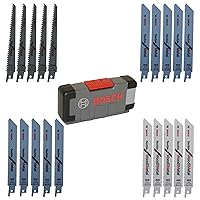
Saw Blade Types Guide — TPI, Teeth, and Materials Explained
Understanding saw blade types is essential for getting clean, efficient cuts. The three key factors that determine a blade’s performance are the tooth count (TPI), tooth geometry, and blade material. This guide explains each factor across all saw types — jigsaw, circular, reciprocating, and mitre — so you can choose the right blade for any cutting task.

Quick Rule of Thumb
Fewer teeth = faster, rougher cut. More teeth = slower, cleaner cut. For wood, use fewer teeth and larger gullets. For metal, use more teeth and finer pitch. For demolition and mixed materials, use bi-metal blades with variable pitch.
Blade Materials
| Material | Abbreviation | Best For | Durability |
|---|---|---|---|
| High Carbon Steel | HCS | Softwood, plywood, plastic | Good for wood, dulls on metal |
| High Speed Steel | HSS | Thin metal, aluminium | Better heat resistance than HCS |
| Bi-Metal | BIM | Wood with nails, mixed materials, metal | Excellent — flexible body + hard teeth |
| Tungsten Carbide Tipped | TCT | Hardwood, MDF, laminate, cement board | Very long-lasting, stays sharp |
| Tungsten Carbide Grit | TCG | Ceramic tile, fibreglass, cement | Abrasive cutting — no teeth |
| Diamond | — | Glass, porcelain, stone, tile | Hardest and most durable |
TPI (Teeth Per Inch) Guide
TPI is primarily used for jigsaw and reciprocating saw blades. Higher TPI means finer cuts but slower speed; lower TPI means faster but rougher cuts.
| TPI Range | Cut Speed | Cut Quality | Best For |
|---|---|---|---|
| 5-8 TPI | Very fast | Rough | Thick wood, tree pruning, demolition |
| 8-12 TPI | Fast | Moderate | General wood cutting, softwood |
| 12-18 TPI | Moderate | Clean | Hardwood, plywood, thin metal |
| 18-24 TPI | Slow | Very clean | Sheet metal, pipes, aluminium |
| 24+ TPI | Very slow | Extra fine | Thin sheet metal, stainless steel |
Key rule: At least 3 teeth should be in contact with the material at all times. This is why thin sheet metal needs a high TPI blade — with a low TPI blade, the teeth straddle the metal and catch, causing vibration and a ragged cut.
Circular Saw Blade Tooth Count
For circular and mitre saw blades, tooth count (not TPI) is used since blade diameters vary. The principle is the same: more teeth = cleaner but slower cut.
| Tooth Count (165mm blade) | Use | Cut Quality |
|---|---|---|
| 16-24T | Ripping along the grain | Fast, rough |
| 36-48T | General purpose crosscutting | Good all-round |
| 60-80T | Fine crosscutting, laminate, plywood | Very clean |
Tooth Geometry
The shape of the teeth also affects performance. The most common configurations on circular saw blades are:
- ATB (Alternate Top Bevel) — The most common. Teeth alternate left-right bevel. Great for crosscutting wood and sheet materials.
- FTG (Flat Top Grind) — Flat-topped teeth for fast ripping cuts along the grain. Not suitable for crosscutting.
- TCG (Triple Chip Grind) — Alternating chamfered and flat teeth. Best for hard materials: MDF, melamine, laminates, aluminium.
- Combination — Groups of ATB teeth followed by a flat raker tooth. Designed for both ripping and crosscutting.
Related guides: Saw Blade Compatibility Guide | T-Shank vs U-Shank | Compatibility Chart