
Never use nylon wall plugs or plasterboard anchors for safety-critical fixings. Handrails, stair rails, banisters, balustrades, gates, ladders, climbing or play equipment, overhead fixings, and anything else whose failure could cause a fall or injury need a fixing designed and rated for that purpose — typically a through-bolt, a mechanical anchor or a resin-bonded anchor with a published load rating (and, for structural use, a European Technical Assessment). If you are not certain the wall and the fixing are up to the job, get advice from a builder or structural engineer.
Wall Plug Sizes — Complete Guide to UK Wall Plug Dimensions
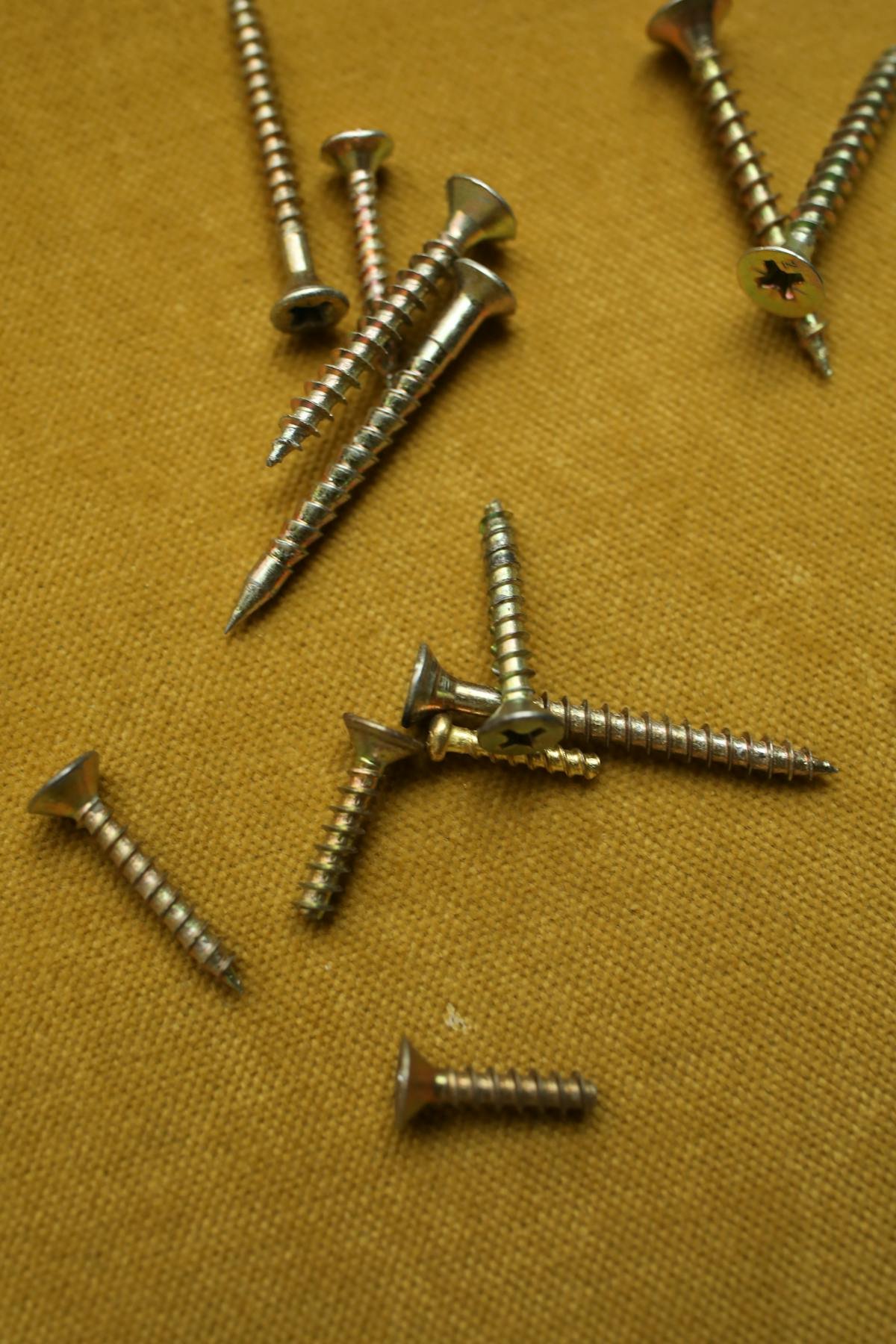
Wall plugs come in a range of sizes defined by their outer diameter. In the UK, sizes are standardised and colour-coded, so a red plug is always 6mm regardless of brand. But diameter is only half the story — wall plugs also vary in length, and choosing the right length for your wall type and load is just as important as choosing the right diameter.
Key Takeaway
Wall plug size has two dimensions: diameter (determines the drill bit and screw gauge) and length (determines holding depth and load capacity). Longer plugs of the same diameter give more holding power, especially in soft or crumbly masonry.
Standard UK Wall Plug Sizes
| Diameter | Colour | Standard Length | Long Version | Drill Bit | Screw Gauge |
|---|---|---|---|---|---|
| 5mm | 🟡 Yellow | 25mm | 30mm | 5mm | No. 4–8 |
| 6mm | 🔴 Red | 30mm | 40–50mm | 6mm | No. 6–10 |
| 7mm | 🟤 Brown | 35mm | 50mm | 7mm | No. 8–12 |
| 8mm | ⚪ White/Grey | 40mm | 50–60mm | 8mm | No. 10–14 |
| 10mm | 🔵 Blue | 50mm | 60–80mm | 10mm | No. 12–16 |
| 12mm | 🟢 Green | 60mm | 80mm | 12mm | No. 16–20 |
Recommended Wall Plugs & Fixings
As an Amazon Associate we earn from qualifying purchases. Check fitment & current price on Amazon (affiliate links).
Before you buy: check that the size, fitting/bore and maximum-rated speed marked on the accessory match what your tool’s manual specifies. We have not physically tested these products; listings are compiled from published specifications. These are affiliate links.
Get the free Drill Bit & Wall-Plug Size Chart (PDF)
Every drill size, wall-plug colour & tap size on one printable sheet.
When to Use Longer Wall Plugs
Standard-length plugs are fine for solid, hard masonry in good condition. But in several situations, a longer plug of the same diameter provides significantly better holding power:
- Soft or aerated blocks (Thermalite, Celcon) — the extra length gives more grip surface in the crumbly material
- Old or crumbling mortar — if you’re forced to drill into a mortar joint, a longer plug reaches further into solid material
- Rendered walls — render can be 15–20mm thick. A standard plug may only have 10mm gripping the masonry behind. Use a longer plug to get adequate depth into the solid wall
- Heavy loads — for critical fixings, a longer plug provides a safety margin
- Fixing thick materials — if the item you’re fixing is thick (e.g., a 30mm timber batten), the screw needs extra length, and a longer plug ensures it engages fully
Tip
When in doubt between standard and long, always go long. The extra grip depth costs nothing in terms of convenience (just a slightly deeper hole) but provides a meaningful increase in holding power.
How Wall Plug Size Affects Load Capacity
Two factors determine how much a wall plug can hold: the diameter (a wider plug grips a larger area of masonry) and the length (a deeper plug engages more material). Doubling the length typically increases holding power by 50–80%, while going up one diameter size typically doubles it.
| fischer SX size | Solid clay brick | Vertically perforated brick | Aircrete (AAC) |
|---|---|---|---|
| SX 5 (5mm) | 25kg | 7kg | 9kg |
| SX 6 (6mm) | 61kg | 17kg | 14kg |
| SX 8 (8mm) | 66kg | 17kg | 31kg |
| SX 10 (10mm) | 71kg | 27kg | 46kg |
| SX 12 (12mm) | 82kg | 41kg | 51kg |
fischer published recommended loads for a single SX anchor, safety factors considered. fischer does not make a 7mm SX, so there is no figure for the brown 7mm plug — check the Rawlplug UNO datasheet for that size. Other brands publish different figures for the same nominal diameter. Full context and the safety-critical carve-out are on our masonry wall plugs guide.
These figures are approximate and assume proper installation in sound masonry. Actual holding capacity depends on the specific masonry condition, drill hole quality, and screw gauge used.
Choosing Between Diameter and Length
If you need more holding power, should you go wider or longer? Here’s the general guidance:
Go wider (next colour up) when you need significantly more strength and your screw/bracket holes can accommodate the larger screw gauge. This is the bigger step-up in holding power.
Go longer (same colour) when you need a moderate increase in holding power but can’t change the screw gauge — for example, if a bracket has pre-drilled holes sized for No. 8 screws, stay with red or brown plugs but use a longer version.
Frequently Asked Questions
Are all brands the same size?
Yes — the diameter is standardised. A 6mm red plug from Fischer, Rawlplug, Hilti, or any budget brand has the same outer diameter and accepts the same drill bit and screws. Quality differences exist in the plastic material and ribbing design, but the sizing is consistent.
What about Fischer DuoPower sizes?
Fischer DuoPower plugs use the same diameter sizing (5mm, 6mm, 8mm, 10mm) but their colour coding is different — they’re grey with a red stripe rather than following the standard colour chart. Always go by the diameter printed on the pack, not the colour, for specialist plugs.
Can I use a wall plug that’s too long?
The plug can be longer than strictly needed — it just sits deeper in the wall. Make sure your drill hole is deep enough and your screw is long enough to engage the full length of the plug. An excessively long plug in a shallow hole is worse than a correctly-sized one.
Recommended Wall Plug Kits
| Product | Sizes Included | Best For | Link |
|---|---|---|---|
| Rawlplug Mixed Wall Plug Kit (272 Pieces) | Yellow, red, brown + screws | Complete home kit | View on Amazon |
| Fischer SX 6mm Red (50 Pack) | Red 6x30mm | General-purpose masonry | View on Amazon |
| Fischer DuoPower 6x30mm (100 Pack) | 6mm universal | Any wall type | View on Amazon |
As an Amazon Associate, we earn from qualifying purchases.
Where to Buy Wall Plugs
Mixed Size Wall Plug Kits on Amazon
Fischer UX Wall Plugs on Amazon
How we compile this guide
We cross-reference compatibility details against manufacturer specifications where available, official tool manuals, and the physical standards that govern fitment (bore sizes, arbor diameters, voltage platforms, connector types). We prioritise primary sources over retailer listings, flag anything we can’t confirm, and re-verify the data on a regular cycle. Where we give a buying recommendation, we tell you the reasoning — not just the link. More on our method →