
Quick Specs
What Battery Does the Makita DUC353 Use?
The Makita DUC353 is a twin 18V (36V) tool that requires two Makita 18V LXT batteries simultaneously. Both battery slots must be filled for the chainsaw to operate. It uses the combined output of two 18V cells to deliver 36V power without needing a separate 36V battery platform.
About the Makita DUC353
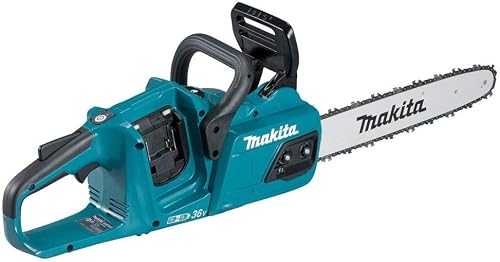
The Makita DUC353 is a twin 18V (36V) LXT brushless chainsaw with a 350mm (14 inch) bar and chain. By using two 18V batteries simultaneously, it achieves 36V power output rivalling many petrol chainsaws. Features include tool-less chain adjustment, variable speed trigger, an electric chain brake for safety, and a brushless motor for maximum efficiency from the battery power available.
Compatible Batteries for the Makita DUC353
The DUC353 requires two Makita 18V LXT batteries at once. Any combination of 18V LXT batteries will work, but both slots must use the same capacity for balanced discharge. Here is how each pairing compares:
| Battery Pair | Capacity Each | Combined Weight | Rating |
|---|---|---|---|
| BL1815 x2 | 1.5Ah | 0.35kg | Not Recommended |
| BL1820 x2 | 2.0Ah | 0.37kg | Not Recommended |
| BL1830 x2 | 3.0Ah | 0.46kg | Compatible |
| BL1840 x2 | 4.0Ah | 0.56kg | Compatible |
| BL1850B x2 | 5.0Ah | 0.63kg | Compatible |
| BL1860B x2 | 6.0Ah | 0.66kg | Recommended |
Recommended Chainsaw Chains
As an Amazon Associate we earn from qualifying purchases. Check fitment & current price on Amazon (affiliate links).
Before you buy: check that the size, fitting/bore and maximum-rated speed marked on the accessory match what your tool’s manual specifies. We have not physically tested these products; listings are compiled from published specifications. These are affiliate links.
Recommended Battery
BL1860B (x2) — This tool requires two 18V batteries simultaneously. Two 6.0Ah batteries are strongly recommended as anything less will result in very short runtimes during cutting.
Minimum Battery
BL1850B (x2) — Two 5.0Ah batteries will run the chainsaw, but expect 20-30% less cutting time per charge compared to the 6.0Ah setup.
Battery Compatibility Notes
Important: This tool requires two 18V LXT batteries simultaneously. Both battery slots must be filled for the tool to operate. Using mismatched capacities (e.g. one 3.0Ah and one 6.0Ah) is possible but not recommended as the smaller battery will drain faster, causing uneven performance.
All Makita 18V LXT batteries use the same slide-on mount. Star Protection batteries communicate with the tool to prevent overheating, over-discharging, and over-current for optimal performance.
Related Resources
For more information on Makita battery compatibility, see our Makita Battery Compatibility Guide, the Power Tool Battery Compatibility FAQ, or browse all batteries.
Battery sizing, runtime & troubleshooting
Recommended pack: Run two 5.0Ah LXT packs for its high 36V draw; two compact packs are not suitable for sustained cutting.
Compatibility caveats: 2× 18V LXT only, and both packs must match. Single-battery LXT packs work, but you need a matched pair.
If it won’t start or cuts out: Won’t start usually means one pack is flat or unseated, or the pair is mismatched — both bays must hold a charged, equal pack.
Runtime: No official per-charge figure; chain speed 0–20 m/s, 200ml oil tank.
Versus the adjacent model: Unlike the single-battery LXT saws here (DSS611, DHS680), the DUC353 needs two packs — budget for a matched pair.
Where to Buy
Ready to add the Makita DUC353 to your toolkit? Check current prices and availability:
As an Amazon Associate, we may earn from qualifying purchases. This doesn’t affect the price you pay.