Impact drivers are workhorses on any jobsite, but they’re also power-hungry tools that demand the right battery to perform. Unlike drill-drivers, impact drivers deliver short bursts of extremely high current to break fasteners loose or drive tough screws. This places unique demands on your battery: enough capacity to get through a full shift, but also enough voltage stability to handle peak load spikes.

The wrong battery can leave you stranded mid-job or cost you hours of downtime swapping packs. The right one turns your impact driver into a genuinely unstoppable tool. This guide walks through the best batteries for impact drivers across Makita, DeWalt, and Milwaukee platforms—based on real-world runtime, durability, and value.
Quick Recommendations: Best Impact Driver Batteries
| Brand | Best All-Round | Best for Heavy Fastening | Best Compact |
|---|---|---|---|
| Makita 18V LXT | BL1850B (5.0Ah) | BL1860B (6.0Ah) | BL1830 (3.0Ah) |
| DeWalt 20V MAX | DCB205 (5.0Ah) | DCB206 (6.0Ah) | DCB204 (4.0Ah) |
| Milwaukee M18 FUEL | 48-11-1850 (5.0Ah) | 48-11-1860 (6.0Ah) | 48-11-1820 (2.0Ah) |
Why Battery Choice Matters for Impact Drivers
Impact drivers operate differently from standard drills. When the bit meets resistance, the tool’s internal hammer mechanism engages—delivering rapid rotational impacts rather than steady torque. Each impact creates a massive current draw lasting milliseconds, followed by a rest period. This spike-and-rest pattern is fundamentally different from the steady draw of a drill-driver.
A undersized battery (say, 2.0Ah) will struggle to handle these spikes. Voltage sag becomes pronounced, the motor slows mid-drive, and you spend more time waiting for the battery to recover than actually driving fasteners. With impact drivers especially, going up even one capacity tier—from 3.0Ah to 5.0Ah—often cuts your actual runtime in half because the battery maintains voltage stability under load.
That said, impact drivers are also relatively lightweight tools. Unlike a heavy circular saw or angle grinder, an impact driver with a compact battery remains genuinely pleasant to use. A 6.0Ah battery will feel noticeably heavier than a 3.0Ah, which matters when you’re driving fasteners overhead or in confined spaces. The best choice depends on your work pattern: light daily use favors 3.0–4.0Ah; full-day fastening work demands 5.0–6.0Ah.
Makita 18V LXT Impact Driver Batteries
Makita’s DTD153 18V LXT impact driver is a compact, nimble workhorse—and it pairs well with Makita’s proven battery lineup. The 18V LXT platform has been refined over a decade, and batteries are readily available and competitively priced.
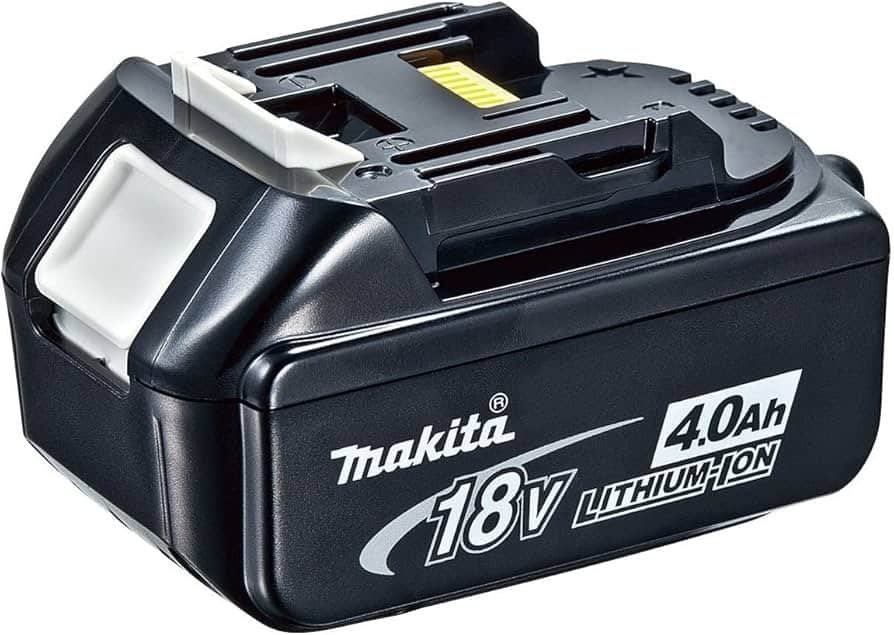
Makita BL1850B (5.0Ah) — Best All-Round Choice
The BL1850B is the Goldilocks battery for impact drivers: enough capacity for a full day’s work, light enough to not fatigue your arm, and proven reliable through hundreds of thousands of jobsites. With the DTD153, you’ll get approximately 150–200 driven fasteners per charge (depending on fastener size and material). That’s enough to handle most drywall, decking, or structural work without reaching for a spare battery.

The BL1850B includes Makita’s integrated fuel gauge, so you always know how much runtime remains. Build quality is excellent—the cells are protected against overcharge, over-discharge, and thermal runaway.
View Makita BL1850B on Amazon UK
Makita BL1860B (6.0Ah) — Best for Heavy Fastening
If you’re running a fastening-heavy job—decking crews, roofing, structural assembly—the BL1860B is worth the extra weight. You’ll nearly double your runtime between charges: 250–300 fasteners per battery. On a full-day fastening job, this often means running just one battery instead of two, which can actually reduce fatigue because you’re not constantly swapping packs.

The BL1860B uses the same platform as the BL1850B, so chargers and compatibility are identical. It’s just a beefier battery for beefier jobs.
View Makita BL1860B on Amazon UK
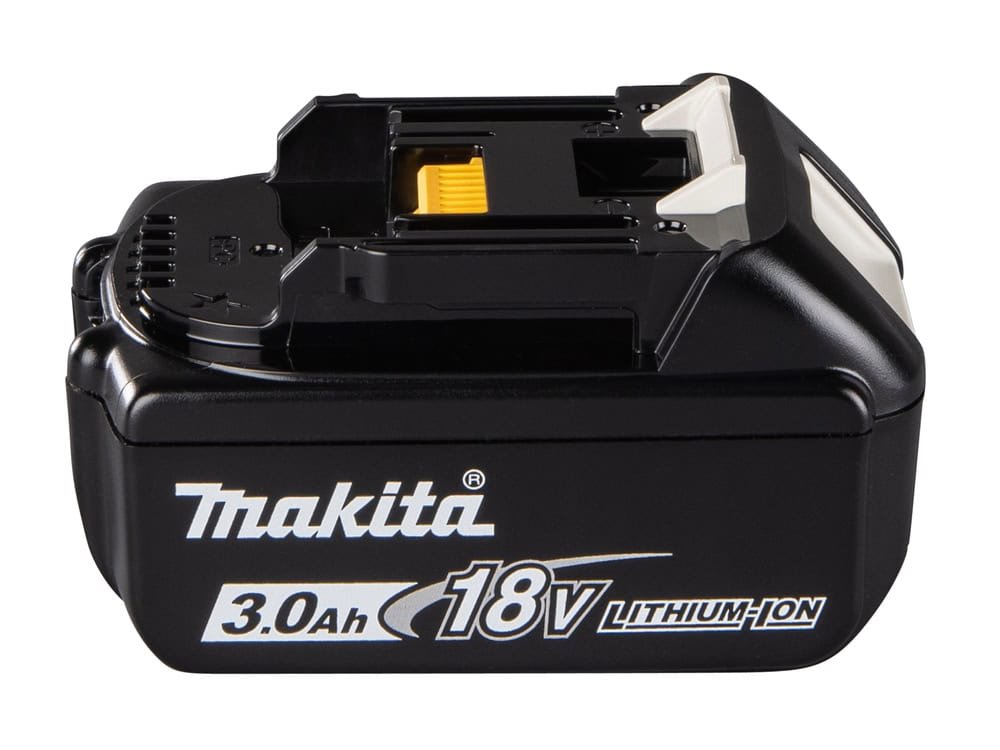
Makita BL1830 (3.0Ah) — Best Compact
For light fastening work, general maintenance, or situations where weight and balance matter (think overhead fastening or working in tight spaces), the BL1830 is genuinely pleasant. It’s nearly 35% lighter than the BL1850B while still delivering respectable runtime—roughly 90–120 fasteners per charge. The impact driver’s weight drops to around 1.3 kg with this battery, making all-day overhead work far less exhausting.

The BL1830 won’t cut it for heavy fastening days, but for varied jobsite work where you’re switching between tools, it’s often the smarter choice.
View Makita BL1830 on Amazon UK
All Makita 18V LXT batteries are compatible with: Makita 18V LXT platform compatibility guide
DeWalt 20V MAX Impact Driver Batteries
DeWalt’s DCF887 20V MAX impact driver is one of the most popular cordless impact drivers globally, and for good reason: it’s brutally reliable and handles everything from light assembly to heavy structural fastening. DeWalt’s 20V MAX batteries are among the most widely available and affordable in the market.
DeWalt DCB205 (5.0Ah) — Best All-Round Choice
The DCB205 is DeWalt’s sweet spot for impact drivers. 5.0Ah delivers solid all-day runtime—roughly 160–210 fasteners per charge—with the DCF887, and the pack is light enough (590g) that fatigue isn’t an issue. DeWalt’s batteries charge quickly (30 minutes with a fast charger), so if you do need a second pack, you’re rarely waiting long.

The DCB205 includes charge-level indicators and is compatible with every DeWalt 20V MAX tool, making it the most versatile single battery choice for a growing tool collection.
View DeWalt DCB205 on Amazon UK
DeWalt DCB206 (6.0Ah) — Best for Heavy Fastening
The DCB206 is built for professional fasteners and long shifts. You’ll see 240–300+ fasteners per charge with the DCF887, and the larger pack also maintains voltage better under heavy load, meaning the tool stays responsive even as the battery drains. Professionals doing fastening-intensive work—roofing crews, framing—often prefer buying one DCB206 over two smaller packs.

At 708g, the DCB206 is noticeably heavier than the DCB205, but the substantial runtime gain (around 40% more fasteners per charge) usually justifies it for full-day fastening work.
View DeWalt DCB206 on Amazon UK
DeWalt DCB204 (4.0Ah) — Best Compact
The DCB204 occupies an interesting middle ground: slightly smaller than the DCB205, delivering 120–160 fasteners per charge, yet noticeably cheaper than either the 5.0Ah or 6.0Ah. If you’re assembling a second battery for backup or supplementary work, the DCB204 offers better value than stepping up to the larger packs.
Weight is under 500g, making it one of the lightest 20V MAX options available—ideal if you’re balancing multiple tools on a busy jobsite.
View DeWalt DCB204 on Amazon UK
All DeWalt 20V MAX batteries are compatible with: DeWalt 20V MAX platform compatibility guide
Note on FLEXVOLT batteries: DeWalt FLEXVOLT batteries also work with 20V MAX tools, offering even higher capacity for users who need maximum runtime.
Milwaukee M18 FUEL Impact Driver Batteries
Milwaukee’s M18 FUEL impact driver (model 2853-20) is a true professional-grade tool, and it demands professional-grade batteries. Milwaukee’s M18 FUEL line uses brushless motor technology, which is more efficient than brushed motors and extracts every joule from the battery.
Milwaukee 48-11-1850 (5.0Ah) — Best All-Round Choice
The 48-11-1850 is Milwaukee’s standard-capacity workhorse. With the M18 FUEL impact driver, you’ll see roughly 180–230 fasteners per charge, and the brushless motor keeps the tool responsive even as battery voltage dips. Milwaukee FUEL batteries are optimized to deliver peak performance in the final 20% of charge, so you don’t experience the voltage sag common on older NiCd or NiMH platforms.

The 48-11-1850 includes RedLithium technology, a proprietary Milwaukee chemistry that improves cycle life and temperature tolerance. These batteries work reliably in cold conditions better than comparable DeWalt or Makita packs—a real advantage if you work outdoors year-round.
View Milwaukee 48-11-1850 on Amazon UK
Milwaukee 48-11-1860 (6.0Ah) — Best for Heavy Fastening
The 48-11-1860 is Milwaukee’s premium fastening battery. Paired with the M18 FUEL impact driver, it delivers 270–330+ fasteners per charge. The larger capacity also means the battery spends less time in the low-voltage zone where tools slow down. On a fastening-intensive site, one 6.0Ah Milwaukee battery often outperforms two smaller packs from competing brands.

At 739g, the 48-11-1860 is heavier than most 6.0Ah alternatives, but the brushless motor’s efficiency means you actually get more work per watt-hour, partly offsetting the added weight.
View Milwaukee 48-11-1860 on Amazon UK
Milwaukee 48-11-1820 (2.0Ah) — Best Compact
Milwaukee’s 2.0Ah compact battery is genuinely minimal—just 250g. It’s designed for quick jobs and as a backup pack for your main batteries. With the M18 FUEL impact driver, expect 50–80 fasteners per charge. That’s not all-day runtime, but it’s enough for a quick repair or to finish a job when your primary batteries are depleted.
The compact form factor makes the impact driver feel almost like a cordless drill again—useful if you’re moving between fastening work and other tasks where balance and agility matter more than continuous runtime.
View Milwaukee 48-11-1820 on Amazon UK
All Milwaukee M18 batteries are compatible with: Milwaukee M18 platform compatibility guide
Note on M12 vs. M18: Milwaukee M12 and M18 batteries are not cross-compatible—the M18 requires the larger pack for impact driver work.
Full Comparison: Impact Driver Battery Specifications
| Battery Model | Brand | Voltage | Capacity (Ah) | Weight (g) | Est. Fasteners per Charge* | Best For |
|---|---|---|---|---|---|---|
| BL1830 | Makita 18V LXT | 18V | 3.0 | 360 | 90–120 | Compact, light work |
| BL1850B | Makita 18V LXT | 18V | 5.0 | 580 | 150–200 | All-round workhorse |
| BL1860B | Makita 18V LXT | 18V | 6.0 | 695 | 180–240 | Heavy fastening |
| DCB204 | DeWalt 20V MAX | 20V | 4.0 | 490 | 120–160 | Compact, value option |
| DCB205 | DeWalt 20V MAX | 20V | 5.0 | 590 | 160–210 | All-round workhorse |
| DCB206 | DeWalt 20V MAX | 20V | 6.0 | 708 | 240–300 | Heavy fastening |
| 48-11-1820 | Milwaukee M18 | 18V | 2.0 | 250 | 50–80 | Compact, backup |
| 48-11-1850 | Milwaukee M18 | 18V | 5.0 | 650 | 180–230 | All-round workhorse |
| 48-11-1860 | Milwaukee M18 | 18V | 6.0 | 739 | 270–330 | Heavy fastening |
*Runtime estimates based on standard 3.5″ fasteners in softwood. Actual runtime depends on fastener type, material, and driving conditions.
Frequently Asked Questions
What’s the Minimum Battery Capacity for an Impact Driver?
2.0–3.0Ah is the practical minimum for any sustained work. Smaller packs drain too quickly and experience significant voltage sag under the tool’s power spikes. For daily use, 5.0Ah is the real sweet spot—it delivers genuine all-day runtime without excessive weight. Compact 3.0Ah packs work well for supplementary work or light-duty jobs but shouldn’t be your primary battery.
Should I Buy One Large Battery or Two Medium Batteries?
Two medium batteries (e.g., 5.0Ah) typically give you better flexibility: while one charges, you use the other. One large battery (6.0Ah) is simpler but means downtime when it depletes. For professional use, the two-battery approach is standard. For home DIY, one larger battery minimizes your investment while still delivering reasonable runtime. Impact drivers benefit from this choice more than other tools because they’re often used for short bursts—you swap batteries less frequently than with continuous-duty tools.
Do Higher-Capacity Batteries Actually Last Longer?
Yes, but not linearly. A 6.0Ah battery does not run twice as long as a 3.0Ah—it delivers roughly 1.8–2.0x the runtime due to more stable voltage under load. Impact drivers in particular benefit from larger batteries because the tool maintains consistent power throughout the charge cycle, making fastening easier and faster. With smaller batteries, you spend proportionally more time waiting for weak-battery performance in the final 20% of charge.
Can I Use One Brand’s Battery with Another Brand’s Impact Driver?
No. Makita 18V LXT, DeWalt 20V MAX, and Milwaukee M18 batteries use different mechanical connectors and electronic communication protocols. They are not interchangeable. DeWalt FLEXVOLT batteries do work with 20V MAX tools, but this is the exception, not the rule. When choosing an impact driver platform, you’re committing to that ecosystem’s battery lineup.
Which Battery Chemistry Is Most Reliable for Impact Drivers?
Modern lithium-ion (Li-ion) batteries in the 18V–20V cordless market are all robust and reliable. What matters more is the thermal management and charging algorithm. Makita’s batteries run cool and charge quickly. DeWalt FLEXVOLT batteries handle extreme temperatures well. Milwaukee RedLithium excels in cold conditions. For impact drivers in general use, all three are excellent—your choice should be based on the tools you already own or plan to buy, not the batteries themselves. If you work in very cold conditions (below 0°C), Milwaukee has a slight edge.
Final Recommendation
For most users, a 5.0Ah battery is the optimal choice—BL1850B for Makita, DCB205 for DeWalt, or 48-11-1850 for Milwaukee. These deliver genuine all-day runtime without excessive weight and are widely available at competitive prices. If you’re a professional fastener or do heavy-duty work regularly, stepping up to 6.0Ah is worth the investment. If you’re doing light work or need maximum portability, a 3.0–4.0Ah compact battery paired with a larger pack gives you versatility.
Whatever capacity you choose, invest in a fast charger. The ability to top up your battery between jobs is often more valuable than buying a third battery. And don’t skimp on quality: genuine OEM batteries from Makita, DeWalt, or Milwaukee cost more but last years longer than budget alternatives.