A cordless leaf blower is only as practical as its battery allows it to be. Unlike saws or drills where you control load and pace, a leaf blower runs at full throttle from start to finish—spinning the fan impeller at thousands of RPM to shift leaves, debris, and dust. This constant high-RPM draw means battery runtime is everything. A battery that’s adequate for drilling will barely keep your blower operational for half your garden.

Choosing the right battery for your cordless blower is straightforward: you need more capacity than you might expect. A 5.0Ah battery should be your minimum for meaningful work, and 6.0Ah is ideal if you’re clearing larger gardens or working regularly. The three major platforms—Makita 18V LXT, DeWalt 20V MAX, and Milwaukee M18—all deliver excellent garden performance when paired with the right battery.
In this guide, we’ll compare runtime expectations across all nine batteries, show you which capacity suits different garden sizes, and explain why carrying a spare battery often makes more sense than buying a smaller one.
Quick Recommendations
| Use Case | Makita 18V LXT | DeWalt 20V MAX | Milwaukee M18 |
|---|---|---|---|
| Best all-round | BL1850B 5.0Ah | DCB205 5.0Ah | 48-11-1850 5.0Ah |
| Best for heavy use | BL1860B 6.0Ah | DCB206 6.0Ah | 48-11-1860 6.0Ah |
| Best lightweight | BL1830 3.0Ah | DCB204 4.0Ah | 48-11-1840 4.0Ah |
Why Battery Choice Matters for Leaf Blowers
Leaf blowers are the most demanding single-tool users in the cordless power landscape. They run at constant maximum power, with little idle time and no opportunity to reduce load. A blower drains a battery fast—often twice as quickly as comparable drilling tasks. This fundamental difference means your intuitions about battery capacity from other tools don’t apply.
A 5.0Ah battery will deliver roughly 15–20 minutes of continuous blowing before capacity is exhausted. For most suburban gardens, this is adequate if you work methodically. A 6.0Ah battery extends that to 20–30 minutes, which is often the difference between finishing your garden in one session or making multiple passes. A 3.0–4.0Ah battery? You’re looking at 8–12 minutes, which limits you to small properties, patio cleanup, or touch-up work only.
Weight also matters with blowers. Unlike stationary sanders, a blower is held at arm’s length throughout operation. A heavier battery shifts the balance point backward and increases fatigue in your shoulders and wrists. If you’re blowing for 20+ minutes, consider whether the extra runtime of a 6.0Ah justifies the additional 70–100g of weight, or whether carrying a spare 5.0Ah battery is the better strategy for your workflow.
Best Batteries for Makita Leaf Blowers
Best All-Round: Makita BL1850B 5.0Ah
The BL1850B is the practical choice for regular garden work. On a blower like the DUB185 or DUB186Z, you’re looking at 15–20 minute runtime per charge—enough to clear a typical suburban property if you don’t break for chat. The Makita 18V LXT ecosystem means this battery integrates with dozens of other tools, so it’s not a single-use purchase.

Model: BL1850B | Capacity: 5.0Ah | Weight: 360g
Best for Heavy Use: Makita BL1860B 6.0Ah
The BL1860B is built for extended blowing sessions. You’ll get 20–30 minutes per charge on a cordless blower—enough for larger properties or working multiple gardens back-to-back without waiting for a charger. The weight penalty is minimal (only 70g more than the BL1850B), making this the pragmatic choice if you blow regularly.

Model: BL1860B | Capacity: 6.0Ah | Weight: 430g
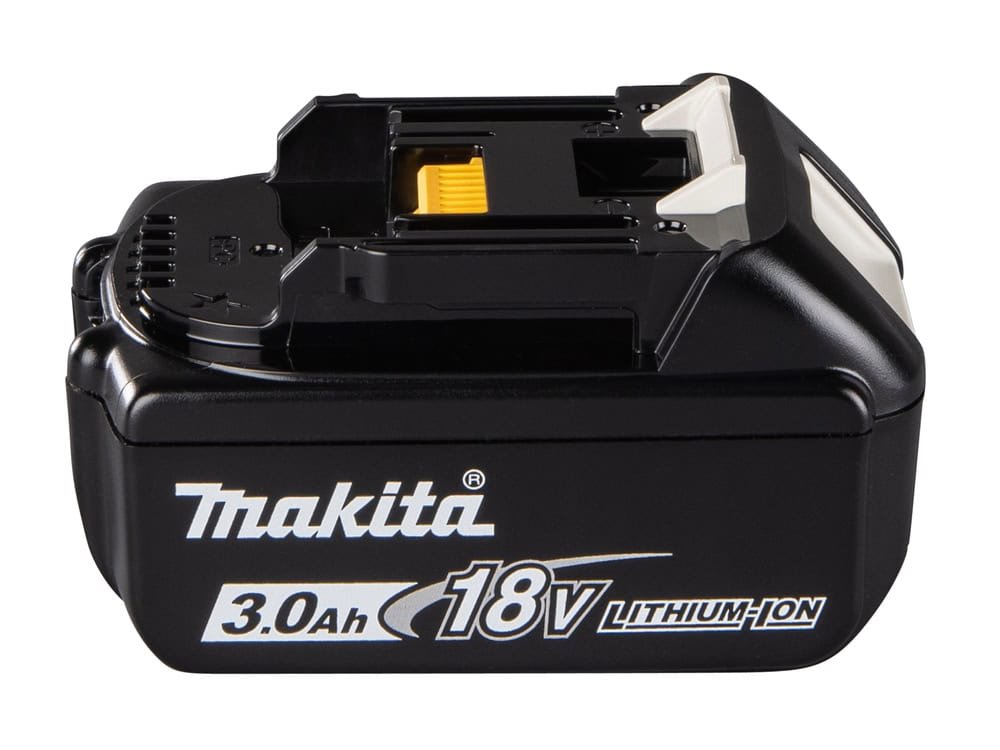
Best Lightweight: Makita BL1830 3.0Ah
The BL1830 weighs just 260g, making it the most comfortable battery for extended arm-level work. However, you’ll only get 8–12 minutes of blowing before needing a swap. This battery suits occasional clearing, small patios, or situations where fatigue from weight is a bigger concern than downtime.

Model: BL1830 | Capacity: 3.0Ah | Weight: 260g
For full specifications and all compatible Makita 18V LXT garden and power tools, visit our Makita 18V LXT Battery Compatibility page.
Best Batteries for DeWalt Leaf Blowers
Best All-Round: DeWalt DCB205 5.0Ah
The DCB205 is DeWalt’s standard 5.0Ah workhorse, and it pairs well with blowers like the DCBL722B. Expect 15–20 minute runtime per charge, with the added benefit that this battery fits every DeWalt 20V MAX tool in your workshop. It’s the sensible starting point for anyone committed to the DeWalt platform.

Model: DCB205 | Capacity: 5.0Ah | Weight: 455g
Best for Heavy Use: DeWalt DCB206 6.0Ah
The DCB206 extends blowing runtime to 20–30 minutes per charge, making it the go-to battery for larger properties or frequent use. DeWalt users who blow regularly report that the DCB206 is worth the investment—it eliminates the frustration of stopping mid-job to charge.

Model: DCB206 | Capacity: 6.0Ah | Weight: 545g
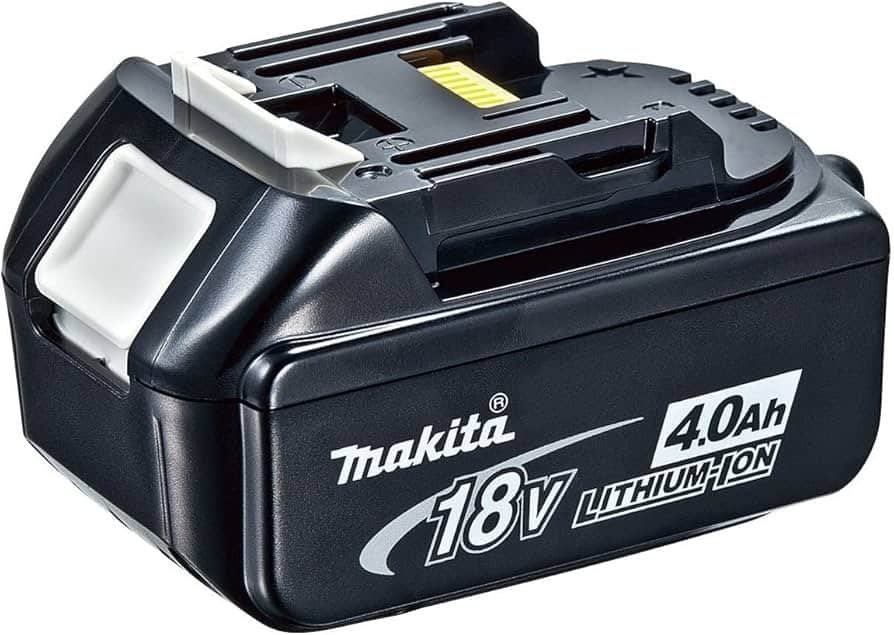
Best Lightweight: DeWalt DCB204 4.0Ah
The DCB204 at 4.0Ah sits between the compact and practical options. You’ll get 10–15 minutes of blowing, with a lighter feel than the 5.0Ah batteries. It’s a reasonable choice if you mix blowing with other 20V MAX tasks, or if you have quick-swap charging available on-site.
Model: DCB204 | Capacity: 4.0Ah | Weight: 365g
See our complete DeWalt 20V MAX Battery Compatibility guide for full tool specifications and battery matching.
Best Batteries for Milwaukee Leaf Blowers
Best All-Round: Milwaukee 48-11-1850 5.0Ah
The 48-11-1850 is Milwaukee’s proven 5.0Ah M18 battery, delivering reliable 15–20 minute runtime on blowers like the M18 BBL or M18 FBLG3. Red Lithium technology ensures consistent power delivery throughout discharge, so your blower maintains speed from start to finish. This is the safe choice for regular garden work.

Buy Milwaukee 48-11-1850 on Amazon
Model: 48-11-1850 | Capacity: 5.0Ah | Weight: 440g
Best for Heavy Use: Milwaukee 48-11-1860 6.0Ah
The 48-11-1860 is Milwaukee’s extended-capacity option, giving 20–30 minutes of continuous blowing. If you’re managing larger properties or back-to-back jobs, the 48-11-1860 minimises downtime and reduces fatigue from stopping to charge between sessions.

Buy Milwaukee 48-11-1860 on Amazon
Model: 48-11-1860 | Capacity: 6.0Ah | Weight: 510g
Best Lightweight: Milwaukee 48-11-1840 4.0Ah
The 48-11-1840 is a compact 4.0Ah battery from Milwaukee, rated for 10–15 minute blowing runtime. It’s lighter in hand, which matters during extended use, but capacity is the limiting factor. Choose this if you value comfort over continuous runtime, or if you rotate spare batteries.
Buy Milwaukee 48-11-1840 on Amazon
Model: 48-11-1840 | Capacity: 4.0Ah | Weight: 370g
For comprehensive compatibility information across all Milwaukee M18 tools and batteries, visit our Milwaukee M18 Battery Compatibility page.
Full Battery Comparison Table
| Battery | Platform | Capacity | Best For | Buy |
|---|---|---|---|---|
| Makita BL1850B | 18V LXT | 5.0Ah | Regular garden blowing | Amazon |
| Makita BL1860B | 18V LXT | 6.0Ah | Extended blowing, larger gardens | Amazon |
| Makita BL1830 | 18V LXT | 3.0Ah | Light duty, comfort priority | Amazon |
| DeWalt DCB205 | 20V MAX | 5.0Ah | Regular garden blowing | Amazon |
| DeWalt DCB206 | 20V MAX | 6.0Ah | Extended blowing, larger gardens | Amazon |
| DeWalt DCB204 | 20V MAX | 4.0Ah | Lighter duty, mixed-task work | Amazon |
| Milwaukee 48-11-1850 | M18 | 5.0Ah | Regular garden blowing | Amazon |
| Milwaukee 48-11-1860 | M18 | 6.0Ah | Extended blowing, all-day jobs | Amazon |
| Milwaukee 48-11-1840 | M18 | 4.0Ah | Light duty, mixed-task work | Amazon |
Frequently Asked Questions
How long does a 5.0Ah battery last in a cordless leaf blower?
A 5.0Ah battery typically delivers 15–20 minutes of continuous blowing, depending on your blower model and operating conditions. This covers most suburban properties if you work steadily without breaks.
What’s the minimum battery size for practical blowing work?
A 5.0Ah battery is the practical minimum for meaningful garden work. Anything smaller than 4.0Ah limits you to small patios or touch-up work. If you’re buying a blower, budget for at least a 5.0Ah battery to make the tool worthwhile.
Is it better to buy a 6.0Ah battery or two 5.0Ah batteries?
It depends on your routine. If you’re comfortable swapping and charging, two 5.0Ah batteries give more flexibility and cost less than one 6.0Ah. If you want to work without stopping, a single 6.0Ah saves time and effort, though it weighs more.
Can I use an 18V blower at 36V (two batteries in series)?
No. Makita 18V LXT and Milwaukee M18 blowers are designed for single 18V batteries only. Using higher voltage will damage the motor and charger. Stick with your platform’s single-battery design.
Why does my blower drain batteries faster than my drill?
Leaf blowers run at continuous maximum RPM with no load reduction opportunity. Drills allow you to control speed and take breaks. The constant full-power operation of a blower drains capacity roughly twice as fast as variable-load tools.
How can I extend leaf blower runtime between charges?
Carry a spare charged battery so you can swap without waiting for the charger. Alternatively, work early morning when moisture on leaves reduces dust and air resistance. Avoid high wind conditions that require maximum throttle. Keep air filters clean—clogged filters force the motor to work harder and drain batteries faster.