Cordless rotary hammers are the most power-hungry tools you’ll ever charge — and choosing the right battery makes the difference between finishing a job and dead cells mid-concrete drilling. Unlike drill drivers or impact drivers, rotary hammers demand sustained high current draw, and underpowered batteries will deplete in minutes or throttle performance when you need it most.

This guide cuts through the marketing and tells you exactly which batteries work best with the Makita DHR243, DeWalt DCH273, and Milwaukee 2713-20 — and why capacity matters more for these tools than any other category.
Quick Recommendations
| Brand | Rotary Hammer | Best Battery | Why |
|---|---|---|---|
| Makita 18V LXT | DHR243 | BL1860B (6.0Ah) | Maximum sustained current; ~20–25 min concrete drilling per charge |
| DeWalt 20V MAX | DCH273 | DCB206 (6.0Ah) | Optimal runtime/weight ratio for SDS+ drilling |
| DeWalt FLEXVOLT | DCH293D2 | DCB606 (6.0Ah 60V) | Highest sustained voltage; best for heavy concrete work |
| Milwaukee M18 FUEL | 2713-20 | 48-11-1860 (6.0Ah) | Handles sustained high amperage; RedLithium chemistry optimal |
Bottom line: For any serious rotary hammer work, 6.0Ah is the baseline. Anything smaller depletes too fast. Carry at least two batteries.
Why Battery Choice Matters for Rotary Hammers
Rotary hammers aren’t like drill drivers. They operate at high amperage continuously — the hammer mechanism, rotation, and SDS+ bit engagement all demand sustained current. A typical 18V or 20V rotary hammer pulls 10–15 amps under load, and that doesn’t drop much as the battery depletes.
This has real consequences:
- Compact batteries (1.3–3.0Ah) are unusable: You’ll get 3–5 minutes of drilling, then need a swap. For concrete work, this is inefficient and frustrating.
- 4.0–5.0Ah batteries work for occasional use: Acceptable if you’re drilling 10–15 holes and done, but you’ll feel the voltage sag in the last quarter of runtime.
- 6.0Ah is the professional standard: Gives you 20–25 minutes of real drilling time on full charge, enough to complete a meaningful section of work before swapping.
- High-amperage compatibility matters: Not all 6.0Ah batteries are created equal. The BL1860B, DCB206, and 48-11-1860 are explicitly rated for sustained high-current tools.
For very heavy work — jackhammering concrete for hours, breaking out masonry, serious demolition — consider a corded SDS-MAX instead. Or if you’re on the Makita side, the 40V XGT platform offers better sustained power than 18V, though the tool selection is narrower.
Browse Milwaukee M18 Batteries on Amazon
Browse DeWalt 18V Batteries on Amazon
Browse Makita 18V Batteries on Amazon
Makita 18V LXT Rotary Hammers
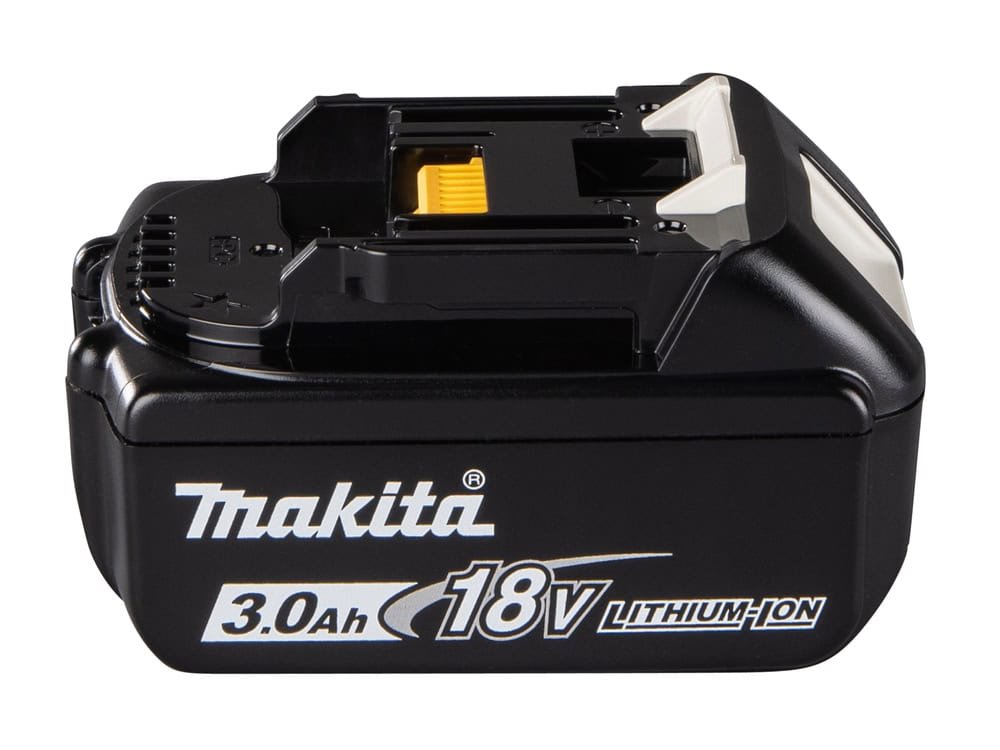
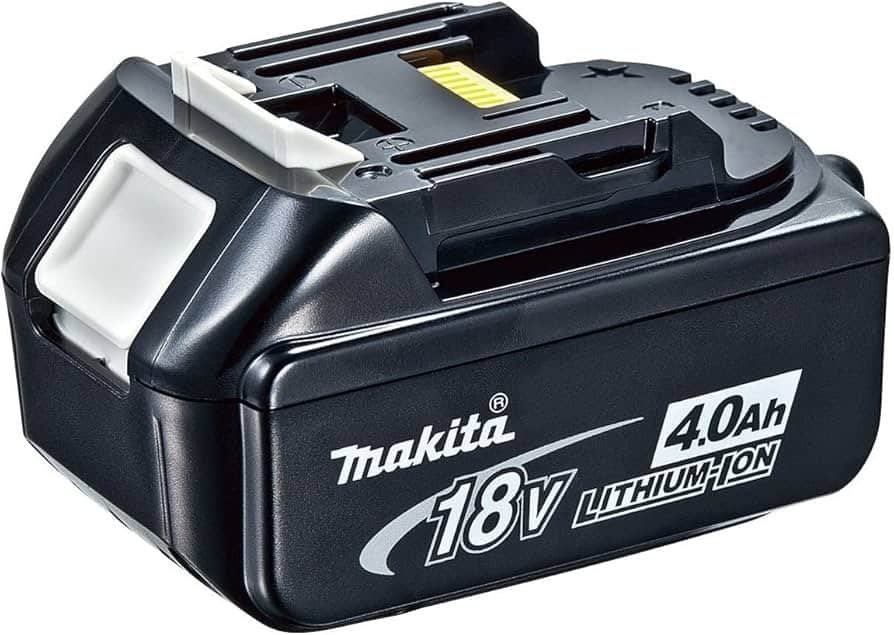
The Makita DHR243 is the entry-level SDS+ rotary hammer — 18V, lightweight, good for occasional SDS drilling. It pairs well with the entire Makita 18V LXT battery platform, but performance depends heavily on which cell you choose.
Best Battery: Makita BL1860B (6.0Ah)
The BL1860B is Makita’s flagship 18V cell. 6000mAh capacity, fuel-gauge LED indicator, native 18V (not 20V like some competitors). Under the hood, it handles the DHR243’s sustained amperage without voltage collapse. Real-world runtime is approximately 20–25 minutes of continuous concrete drilling per charge.
Alternatives:
- BL1850 (5.0Ah): Acceptable for light SDS work or if you own two and rotate. Runtime ~16–18 minutes. Saves weight if that matters for your application.
- BL1840 (4.0Ah): Only if drilling occasional holes. Not recommended for serious work.
- Avoid: BL1830 and smaller. They’ll throttle performance and overheat.
Important: If you’re considering the Makita 40V XGT platform (different ecosystem), the 40V XGT rotary hammers exist but the tool is less common and the platform is newer. Stick with 18V LXT unless you’re already invested in 40V. See 18V vs 40V compatibility for more.
DeWalt 20V MAX Rotary Hammers
The DeWalt DCH273 is the flagship 20V MAX SDS+ model — compact, fast, reliable. It works across the full DeWalt 20V MAX platform, with best results at higher capacities.
Best Battery: DeWalt DCB206 (6.0Ah)
The DCB206 is DeWalt’s standard 6.0Ah 20V cell — premium build, exceptional current delivery, fuel-gauge indicator. Paired with the DCH273, you get 20–23 minutes of sustained concrete drilling. DeWalt’s 20V MAX cells are spec’d for high-amperage tools, so the DCB206 won’t throttle.
Alternatives:
- DCB205 (5.0Ah): Lighter, smaller, acceptable if you rotate two batteries. Runtime ~16–18 minutes.
- DCB204 (4.0Ah): Avoid for rotary hammer work. Too small.
DeWalt FLEXVOLT option: If you’re considering the DeWalt DCH293D2 FLEXVOLT rotary hammer (60V), use the DCB606 (6.0Ah 60V). FLEXVOLT cells automatically step down to 20V when used on 20V tools, or stay at 60V on 60V tools. For the 60V rotary hammer, the sustained voltage is superior and you’ll see better performance on hard concrete. See 20V MAX vs FLEXVOLT compatibility for more detail.
Milwaukee M18 FUEL Rotary Hammers
The Milwaukee 2713-20 is the premium M18 FUEL SDS+ model — compact, powerful, and built for trade work. It draws heavily from the Milwaukee M18 battery platform, and RedLithium cells are the optimal choice.
Best Battery: Milwaukee 48-11-1860 (6.0Ah RedLithium)
The 48-11-1860 is Milwaukee’s 6.0Ah flagship — RedLithium chemistry, fuel-gauge, high-amperage rated. With the 2713-20, expect 20–25 minutes of concrete drilling per charge. RedLithium cells are engineered for sustained high-amp tools like rotary hammers and impact wrenches; Milwaukee doesn’t skimp on current delivery.
Alternatives:
- 48-11-1850 (5.0Ah RedLithium): Lighter, acceptable for intermittent use. Runtime ~16–18 minutes.
- Avoid non-RedLithium M18 cells: Older NiCd or Basic Lithium cells don’t handle sustained high amperage as well. Stick with RedLithium or newer.
Full Comparison Table: Rotary Hammer Batteries
| Brand & Model | Capacity | Voltage | Rotary Hammer | Est. Runtime (Concrete Drilling) | Recommended? |
|---|---|---|---|---|---|
| Makita BL1860B | 6.0Ah | 18V | DHR243 | 20–25 min | ✓ Best choice |
| Makita BL1850 | 5.0Ah | 18V | DHR243 | 16–18 min | ✓ Acceptable |
| Makita BL1840 | 4.0Ah | 18V | DHR243 | 12–15 min | ✗ Avoid |
| DeWalt DCB206 | 6.0Ah | 20V MAX | DCH273 | 20–23 min | ✓ Best choice |
| DeWalt DCB205 | 5.0Ah | 20V MAX | DCH273 | 16–18 min | ✓ Acceptable |
| DeWalt DCB606 | 6.0Ah | 60V FLEXVOLT | DCH293D2 | 22–26 min | ✓ Premium option |
| Milwaukee 48-11-1860 | 6.0Ah | M18 | 2713-20 | 20–25 min | ✓ Best choice |
| Milwaukee 48-11-1850 | 5.0Ah | M18 | 2713-20 | 16–18 min | ✓ Acceptable |
Runtime estimates based on continuous SDS+ drilling into concrete at full throttle. Actual results vary by concrete hardness, bit condition, and operator technique.
Pro Tips for Rotary Hammer Battery Management
- Carry at least two 6.0Ah batteries: Concrete drilling is non-stop work. While one charges, you drill with the other. A single battery creates downtime.
- Rotate batteries to extend lifespan: High-amperage discharge stresses lithium cells. Rotating between two or three batteries distributes the load and slows degradation.
- Don’t let batteries fully deplete: Leave the charger plugged in once it hits 80–90%. Stopping just short of full capacity extends cycle life.
- Keep batteries cool: Sustained drilling generates heat. Let batteries cool between uses if possible, especially in summer.
- Monitor voltage sag: As a battery ages, voltage sag (drop under load) increases. If you notice the rotary hammer slowing in the last few minutes, it’s time to retire that cell.
- For very heavy work, consider corded SDS-MAX: If you’re jackhammering concrete all day, a corded 1500W+ SDS-MAX will outlast any cordless setup. Cordless is convenient; corded is relentless.
FAQ: Rotary Hammer Batteries
Q: Can I use a 4.0Ah or 5.0Ah battery in a rotary hammer?
A: Yes, technically. But it’s not recommended for serious work. Rotary hammers draw sustained high current, so a 4.0Ah will deplete in ~12 minutes, and a 5.0Ah in ~16–18 minutes. If you’re drilling 5–10 holes then done, it’s fine. If you’re tackling a larger job, you’ll spend more time charging than drilling. Invest in a 6.0Ah.
Q: Do I need matching batteries for two rotary hammers?
A: Not necessarily. Makita DHR243, DeWalt DCH273, and Milwaukee 2713-20 are all standalone tools — you can pair each with a different battery. But if you’re running the same tool with two batteries rotating, yes, matching capacity ensures consistent runtime.
Q: Is DeWalt FLEXVOLT better than 20V MAX for rotary hammers?
A: FLEXVOLT (60V) is measurably better for sustained concrete drilling — higher sustained voltage means less sag and more power. But it’s also more expensive and overkill if you’re only drilling occasional holes. For professional concrete work, FLEXVOLT wins. For homeowner DIY, 20V MAX is sufficient.
Q: Can I use a Makita 18V battery in a DeWalt rotary hammer?
A: No. Makita 18V LXT, DeWalt 20V MAX, and Milwaukee M18 are completely different platforms — different connector geometry, voltage profiles, and communication protocols. Batteries are not cross-compatible. See Makita vs DeWalt compatibility for more.
Q: How often should I replace rotary hammer batteries?
A: Lithium batteries degrade with every charge cycle. A typical 18V/20V/M18 6.0Ah cell is rated for 1000–2000 cycles. At one cycle per day, that’s 2–5 years. In heavy trade use (5+ cycles/day), expect 1–2 years. Monitor voltage sag and runtime; when a battery that used to deliver 25 minutes now delivers 12 minutes, it’s time to retire it.