Fitting the wrong sanding pad to your orbital sander is the fastest way to waste money, waste abrasive, and get poor surface finish. The wrong pad can slip under load, clog with dust, overheat the backing plate, or simply refuse to stick. Sander pad compatibility is determined by three factors: backing type, pad size, and hole pattern. Mismatched any one of these and the disc won’t fit properly or won’t perform correctly.
This guide covers the full compatibility landscape across the main UK brands: Festool, Bosch, Makita, and DeWalt. If you use any of these sanders, you’ll find your pad type and what’s compatible with your machine. We’ll also show you which brands can share pads across systems and which are locked into proprietary ecosystems.
Quick Reference: Sander Pad Compatibility at a Glance
| Brand | Model Range | Pad Size | Attachment | Hole Pattern | Cross-Brand Compatible? |
|---|---|---|---|---|---|
| Bosch | PEX/ROS series | 125mm, 150mm | Hook-and-loop or PSA | 8-hole or 17-hole | Limited (PSA pads proprietary) |
| Makita | BO4556, BO4565 | 110mm, 125mm | Hook-and-loop | 8-hole | Yes — with DeWalt & Porter Cable |
| DeWalt | DWE6423, DWE6424 | 125mm | Hook-and-loop | 8-hole | Yes — with Makita & Porter Cable |
| Festool | ETS 125, ETS 150 | 125mm, 150mm | Hook-and-loop (proprietary Jetstream) | Jetstream (unique) | No — Festool-only |
The Three Compatibility Factors
Sander pad compatibility depends on three independent measurements. Get all three right, and the pad will fit and work perfectly. Get one wrong, and you’ll have problems.
1. Backing Type: Hook-and-Loop vs PSA
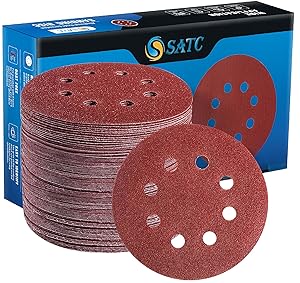
Hook-and-loop (Velcro-style) is the dominant system in the UK. The backing has tiny hooks that grip adhesive loops on the sanding disc. It’s reusable, durable, and affordable — most orbital sanders use this system. PSA (pressure-sensitive adhesive) is a sticky backing that bonds the disc permanently. Most professionals avoid PSA for orbital sanders because once a disc is stuck, it’s stuck for life; removing it often damages the backing plate.
Mixing the two is impossible. A hook-and-loop pad won’t work with a PSA disc, and vice versa. Know your sander’s backing type before buying pads.
For more detail on the pros and cons of each system, read our full guide: Hook-and-Loop vs PSA Sanding Discs.
2. Pad Size: 125mm vs 150mm
Pad size determines the contact area and coverage speed. The two main sizes in the UK market are 125mm (orbit sanders and many orbital sanders) and 150mm (larger orbital sanders and deck sanders). A 125mm pad is roughly 123cm² of sanding surface; a 150mm pad is roughly 177cm². You cannot fit a 150mm disc on a 125mm sander — the overhang will cause imbalance and the machine will be unsafe to operate.
Always check your sander’s manual for the correct pad diameter. It’s usually printed on the machine itself.
See our full guide: 125mm vs 150mm Sander Pads.
3. Hole Pattern: Dust Extraction Alignment
Sanding discs have holes cut into them to enable dust extraction. The backing plate has corresponding holes that align with your sander’s dust collection ports. If the holes don’t match, dust doesn’t get pulled through efficiently — you’ll get recirculation, clogging, and a slower, messier job.
Common patterns in the UK are 8-hole (industry standard for Makita, DeWalt, Porter Cable), 17-hole multi-hole (Bosch), and proprietary Jetstream (Festool). We’ll break down each system below.
For technical details on hole patterns: Sander Pad Hole Pattern Guide.
Brand-by-Brand Compatibility Summary
Festool: Proprietary System, No Cross-Compatibility
Festool‘s ETS 125 and ETS 150 sanders use Festool’s proprietary hook-and-loop backing and unique Jetstream hole pattern. Festool discs are not compatible with any other brand, and no third-party disc will fit a Festool sander correctly. This is by design — Festool integrates dust extraction, finishing quality, and pad design as a system. If you own a Festool sander, you will buy Festool pads. This limits your options but guarantees performance.
Bosch: Mixed System, Limited Cross-Compatibility
Bosch sanders (PEX and ROS series) come in both hook-and-loop and PSA variants. The hook-and-loop versions use 125mm or 150mm pads with either 8-hole or 17-hole patterns. Bosch is moderately compatible with third-party hook-and-loop discs for 125mm (other brands make compatible pads), but PSA-backed Bosch pads are proprietary. The 17-hole pattern on some Bosch models is unique and limits disc options.
Makita: Interchangeable with DeWalt and Porter Cable
Makita orbital sanders (models like BO4556 and BO4565) use 110mm or 125mm hook-and-loop pads with an 8-hole pattern. This 8-hole standard is shared with DeWalt and Porter Cable — meaning you can use pads from any of these three brands interchangeably on a Makita machine, as long as the size matches. This is the most affordable and flexible option for UK tradespeople.
DeWalt: Interchangeable with Makita and Porter Cable
DeWalt orbital sanders (DWE6423, DWE6424) also use the 8-hole, 125mm hook-and-loop standard. Like Makita, DeWalt pads are compatible with Makita and Porter Cable. This cross-compatibility is why these three brands dominate the affordable UK market — pads are commoditised and competition drives prices down.
Cross-Brand Compatibility Matrix
| Can I use [X] pads on a [Y] sander? | Answer | Notes |
|---|---|---|
| Makita pads on DeWalt sander? | Yes | Same 8-hole, 125mm hook-and-loop standard |
| DeWalt pads on Makita sander? | Yes | Same 8-hole, 125mm hook-and-loop standard |
| Porter Cable pads on Makita or DeWalt? | Yes | All three share 8-hole standard |
| Bosch pads on Makita/DeWalt? | No (usually) | Bosch often uses 17-hole; backing specs differ |
| Festool pads on any other brand? | No | Jetstream pattern is Festool-exclusive |
| Third-party generic pads on Makita/DeWalt? | Yes | Many budget brands make 8-hole, 125mm pads |
| Third-party pads on Bosch? | Maybe | Depends on hole pattern and size match |
| Third-party pads on Festool? | No | Festool backing is unique |
Choosing the Right Sander Pad for Your Machine
Here’s how to identify your sander and find the correct pad:
Step 1: Check Your Sander Model
Look on the machine body or in your manual for the model number. Common examples:
- Makita: BO4556, BO4565, BO4057, BO3710
- DeWalt: DWE6423, DWE6424, DWE6423K
- Bosch: PEX 220A, PEX 300, ROS 130, ROS 540
- Festool: ETS 125, ETS 150, ROTEX RO 90
Step 2: Note Your Backing Plate Type
Remove the dust cover and look at the backing plate. Count the holes (usually 5, 6, 8, or 17) and note the plate diameter. The backing plate will also feel either fuzzy (hook-and-loop) or slightly sticky (PSA). Never mix these up.
Step 3: Cross-Reference This Guide
Use the compatibility matrix above to find your brand and match the pad size, backing type, and hole pattern. If you’re unsure, your sander’s manual will specify the exact pad part number.
Step 4: Buy the Correct Pad
Once you’ve identified your type, you have options:
- OEM pads (brand-specific) are reliable and always fit perfectly but are the most expensive.
- Compatible third-party pads (for Makita, DeWalt, Bosch) are 20–40% cheaper and work just as well.
- Festool pads are your only option if you own a Festool sander.
For bulk pricing on compatible pads: Browse sanding pads on Amazon UK.
Common Compatibility Problems and Solutions
Problem: Pad keeps lifting under load → You’re likely using a worn backing plate or a PSA disc on a hook-and-loop plate. Replace the backing plate if the hook layer is flattened, or switch to the correct disc type.
Problem: Dust isn’t being extracted properly → Check hole alignment. Mismatched hole patterns reduce extraction by up to 40%. If you’ve changed disc brands, ensure the new disc uses the same hole pattern.
Problem: Disc overheats and scorches wood → Wrong grit for your application, or hook-and-loop backing is degraded (replace it). Overheating also happens if dust extraction is blocked — clear the ports.
Problem: Can’t get the disc off the backing plate → You’ve likely stuck a PSA disc on a hook-and-loop plate (or vice versa) by mistake. Use a plastic scraper to gently lift the disc edge and peel it off. Never force it; you’ll damage the backing.
Related Guides on This Site
For deeper dives into specific topics, see:
- Hook-and-Loop vs PSA Sanding Discs — Detailed comparison of backing types
- 125mm vs 150mm Sander Pads — Size guide with coverage data
- Sander Pad Hole Pattern Guide — All hole patterns explained
- Best Sander Pads for Wood, Metal and Plaster — Material and grit selection
- Angle Grinder Disc Compatibility Guide — Similar compatibility rules for grinding discs
- Saw Blade Compatibility Guide — Disc fitting for circular and reciprocating saws
Watch: Video Guide
Frequently Asked Questions
Can I use Festool discs on a Makita sander?
No. Festool uses a proprietary Jetstream hole pattern and backing system that is unique to Festool machines. Festool discs will not fit correctly on any other brand’s sander, and attempting to force one on risks damaging both the disc and your backing plate.
Are DeWalt and Makita pads really interchangeable?
Yes, they are. Both use 125mm, 8-hole, hook-and-loop backing. Many UK tradespeople routinely mix brands on the same machine because the compatibility is seamless. Porter Cable pads also fit this standard.
What’s the difference between OEM and third-party sanding pads?
OEM (original equipment manufacturer) pads are made by the sander brand or a licensed supplier and are engineered to exact specifications. Third-party pads are made by independent abrasive companies to the same dimensional standard but may use slightly different adhesive or hook density. In practice, performance is very similar; the main difference is price. Third-party pads are usually 20–40% cheaper.
How do I know if my backing plate is worn out?
Run your hand gently over a clean backing plate. A healthy hook-and-loop plate feels fuzzy and grips lightly when pressed. A worn plate feels flat and slippery — it won’t hold a disc firmly. If discs are slipping or lifting frequently, the backing plate is likely worn and should be replaced (usually £15–40 depending on the brand).
Can I fit a 150mm disc on my 125mm sander?
No, and you should not attempt it. A 150mm disc overhangs the backing plate by 25mm on each side, creating dangerous imbalance and vibration. At operating speed (5,000+ rpm), this overhang can cause the disc to strike the sander body, your workpiece, or your hands. Always use the disc size specified for your machine.
Why do some Bosch sanders use 17-hole patterns when everyone else uses 8?
Bosch’s 17-hole multi-hole pattern is designed to improve dust extraction (more holes = more surface area for air to pass through). The trade-off is reduced disc availability — fewer third-party manufacturers make 17-hole discs. If you use a Bosch with 17-hole backing, you’re more limited in disc options compared to a standard 8-hole machine.