What Drill Bit for Stainless Steel — Complete Guide
Stainless steel is notoriously difficult to drill. It work-hardens as you drill (the material becomes harder the more you work it), and regular HSS bits will dull, overheat, and seize. The solution is cobalt bits (M35 or M42 grade), cutting oil, and a specific technique that maintains progress without pausing.
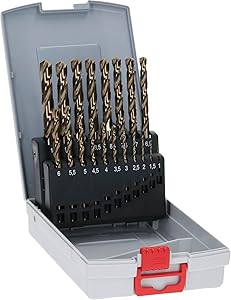
This guide covers why stainless steel is so difficult, which bits and speeds work, technique to avoid seizure, and common mistakes that cause bit breakage and ruined workpieces.
Why Stainless Steel Is Hard to Drill
Problem 1: Work Hardening
What it is: Stainless steel has an unusual property—the more you work (stress) the material, the harder it becomes. As your drill bit cuts through stainless, the material immediately around the hole hardens due to the stress.
The danger: If you drill continuously, you’re constantly working through freshly hardened material. It gets progressively harder. If you pause mid-drill and restart, the hardened material is now extremely difficult to penetrate. The bit may seize or snap.
Example: A hole drilled in one continuous motion takes 30 seconds and progresses smoothly. The same hole drilled with a 10-second pause in the middle might take 2 minutes and seize twice. The work-hardening difference is dramatic.
Problem 2: Galling
What it is: A chemical adhesion between the stainless steel and the cutting bit flutes. The material literally sticks to the bit.
Result: As material sticks to the bit and builds up, friction increases rapidly. The bit can overheat or seize suddenly.
Prevention: Cutting oil prevents galling by keeping surfaces slick and reducing metal-to-metal contact.
Problem 3: Toughness and Thermal Conductivity
Toughness: Stainless steel doesn’t fracture easily. It requires true cutting action—not the brittle fracture that works on cast iron.
Low thermal conductivity: Heat generated by drilling doesn’t dissipate into the workpiece like it does in mild steel or aluminium. The heat concentrates at the bit tip, rapidly softening HSS.
Combined effect: HSS bits overheat because heat can’t escape, and they lack the hardness to cut stainless efficiently at high speed. This is why cobalt is essential.
Problem 4: Surface Oxide Layer
What it is: Stainless steel has a thin passive oxide layer (chromium oxide) that protects it from corrosion. This layer is extremely hard.
The danger: As your bit breaks through this layer, you encounter this ultra-hard barrier. If your bit isn’t hard enough (e.g., HSS), it will dull rapidly. Cobalt is hard enough to penetrate this layer.
Stainless Steel Grades and Drilling Difficulty
304 Stainless (Most Common)
Hardness: Medium. Most common stainless used in kitchens and bathrooms.
Drilling difficulty: Moderate. Work-hardens significantly but not as severely as 316.
Best bit: Cobalt M35 (5–8% cobalt) is adequate. M42 if you want maximum durability.
Speed: 600–1000 RPM for 6–10mm holes.
316 Stainless (Premium, Marine Grade)
Hardness: Hard. Contains molybdenum for superior corrosion resistance, making it harder to drill.
Drilling difficulty: Severe. Work-hardens extremely fast. Can seize even with cobalt if technique is poor.
Best bit: Cobalt M42 (8% cobalt, premium grade). M35 is marginal.
Speed: 400–800 RPM for 6–10mm holes (slower than 304).
Special care: Use maximum cutting oil, drill continuously without pausing, and expect it to be difficult.
Duplex Stainless (Super Duplex)
Hardness: Very hard. Used in high-pressure applications.
Drilling difficulty: Extreme. Professional-grade work. Beyond most DIYers.
Best bit: Carbide-tipped or specialized super-hard cobalt. Not a job for standard cobalt bits.
How to Identify Stainless Grade
Check the material specification or product sheet. If unknown, assume 304 (most common). If it came from a marine environment or is premium-grade, assume 316 (harder).
Drill Bit Types for Stainless Steel
Regular HSS (High-Speed Steel) — NOT Recommended
Why it fails: HSS will dull in 2–5 holes on stainless steel. Even with perfect technique and abundant oil, HSS cannot match cobalt’s hardness. Don’t waste your time or workpieces using HSS on stainless.
Exception: If drilling a single small hole (under 3mm) in 304 stainless and you only have HSS, it might work with heavy oiling. Don’t do production work or larger holes with HSS.
Cobalt (HSS-Co, 5–8% Cobalt Content) — Best Choice
Grades:
- M35: 5% cobalt. General-purpose cobalt. Good for 304 stainless.
- M42: 8% cobalt. Premium cobalt. Better for 316 and harder stainless grades.
Why cobalt works: Cobalt is significantly harder than HSS and resists the hardening and heat that stainless steel drilling generates.
Speed: 600–1500 RPM depending on hole size (slower than HSS).
Cost: £1–£4 per bit. More expensive than HSS, but you’ll get 10–50 holes before the bit dulls (compared to 2–5 with HSS).
Durability: In 304 stainless: 20–50 holes per bit. In 316 stainless: 10–30 holes per bit.
Amazon: Cobalt M35 drill bits on Amazon
Amazon: Cobalt M42 premium bits on Amazon
Carbide-Tipped Bits (Premium Option)
What they are: Bits with tungsten carbide tips (similar to masonry bits but designed for metal).
Best for: Production drilling (many holes). Harder than cobalt, so they last extremely long.
Limitation: Carbide is brittle. If you apply too much pressure or hit a hard inclusion, the tip can chip or shatter.
Cost: £3–£8 per bit. More than cobalt, but lasts 100+ holes in stainless steel.
Use when: You’re drilling 50+ holes in stainless steel and durability matters more than cost.
Amazon: Carbide-tipped metal drill bits on Amazon
Titanium-Coated Bits (Avoid for Stainless Steel)
Why they don’t work: Titanium coating offers no advantage for stainless steel. The coating wears away quickly, and the underlying HSS still dulls. Don’t buy titanium-coated bits for stainless work—use cobalt instead.
Cutting Oil for Stainless Steel
Why Oil Is Critical
Cutting oil serves two critical functions when drilling stainless steel:
- Prevents galling: Keeps stainless material from sticking to the bit flutes. Without oil, galling accelerates bit deterioration dramatically.
- Cools the bit: Stainless steel generates intense friction heat. Oil dissipates heat, keeping the bit at optimal hardness.
Effect: With abundant cutting oil, you can drill 20–50 holes with a cobalt bit in stainless steel. Without oil, the same bit dulls in 2–5 holes.
Best Oils for Stainless Steel
Heavy-duty cutting oil (straight mineral oil): Best for stainless steel work. Use liberally.
Cutting paste/cream: Also excellent. Thick consistency stays on the hole better. Good for overhead or vertical drilling (overhead/vertical work tends to drip liquid oil).
Soluble oil (emulsion with water): Works but not as good as straight oil for stainless steel. The water content helps some, but pure oil is superior.
Application: Apply oil before drilling, reapply every 5–10 holes. For stainless steel, be generous—don’t skimp on oil. Errors on the side of too much, not too little.
Amazon: Cutting oils for stainless steel on Amazon
Emergency Lubricants (If No Cutting Oil)
Tap water: Better than nothing. Won’t work as well as oil, but provides some cooling and lubrication.
WD-40 or similar penetrating oil: Not ideal, but works in a pinch. Not as thick as cutting oil, but still provides some benefit.
Avoid: Drilling stainless steel dry (without any lubricant). Results will be poor and bit life will be very short.
Speeds and Technique
Optimal Speeds for Stainless Steel
| Hole Size | 304 Stainless (Cobalt) | 316 Stainless (Cobalt) | Comments |
|---|---|---|---|
| 3–4mm | 1000–1500 RPM | 800–1200 RPM | Faster for small holes is OK. Less work-hardening build-up. |
| 6–8mm | 800–1200 RPM | 600–1000 RPM | Standard speeds. Medium bit size. |
| 10–12mm | 600–1000 RPM | 400–800 RPM | Larger bits require slower speeds. Significant heat generation. |
| 16mm+ | 400–800 RPM | 300–600 RPM | Very slow. Heat dissipation is critical at larger sizes. |
Key principle: Slower is better with stainless steel. Speed generates heat, and heat is stainless steel’s enemy. If uncertain, go slower rather than faster.
Critical Technique: Never Pause
The golden rule: Once you start drilling stainless steel, do NOT stop and restart. Drill in one continuous motion all the way through (or to your target depth).
Why: Work hardening means the material around your hole is progressively hardening as you drill. If you pause and let the material cool and settle, it hardens further. When you restart, you’re drilling through material that’s now significantly harder. The bit may seize.
Practical example:
- Continuous drill: 10mm hole drilled straight through in 20 seconds, no trouble.
- With a 5-second pause: May take 30–40 seconds and require extra pressure to restart.
- With a 15-second pause: May seize or require stopping and reversing out.
Technique: Before you start, mentally commit to drilling without stopping. Don’t pause to check progress, don’t answer your phone, don’t get distracted. Squeeze the trigger and maintain consistent, moderate pressure until you’re through.
Pressure and Force
Use moderate, steady pressure—not excessive. Many people think more pressure = faster drilling. The opposite is true for stainless steel.
Why: Excessive pressure generates more heat and increases galling. Moderate pressure, maintained steadily, allows the cutting edge to work efficiently.
Feel: You should hear a steady grinding/cutting sound. If the bit is singing/squealing or making a harsh noise, you’re either going too fast or applying too much pressure. Ease up.
Step-by-Step Drilling Technique
Step 1: Prepare
Mark your hole with a centre punch (tap with a hammer). This prevents the bit from walking across the slippery stainless surface.
Step 2: Apply Oil
Apply cutting oil generously to the hole location and to the drill bit. Don’t skimp.
Step 3: Insert Bit and Set Speed
Insert your cobalt bit into the drill chuck (tighten firmly). Set the drill speed according to the table above. Use a variable-speed drill so you can maintain precise speed.
Step 4: Pilot Hole (Recommended for Holes 6mm+)
If drilling a hole 6mm or larger, start with a pilot hole (3–4mm) first. This guides the larger bit and reduces chance of walking or seizing.
Why pilots matter for stainless steel: A pilot hole reduces initial stress on the bit as it engages, making the whole process smoother.
Step 5: Start Drilling
Position the bit at the marked spot. Squeeze the trigger gently. Start at medium speed (not full power). The bit should gradually engage with the stainless steel surface.
Initial phase (first 2–3mm): Use light pressure. Let the bit bite in. You want the cutting edge to establish contact smoothly.
Step 6: Maintain Steady Pressure
Once the bit is engaged, maintain steady, moderate pressure. The sound should be a consistent grinding/cutting noise. You’ll see fine stainless steel chips or dust coming out of the hole.
Don’t pause. Keep your hand steady. Commit to drilling straight through.
Step 7: Withdrawal
Once the bit breaks through the back surface (or reaches target depth), slowly reduce pressure and maintain speed. Let the flutes finish cutting rather than forcing.
Slowly withdraw the bit. Don’t jerk it out suddenly.
Step 8: Clean Up
Wipe away chips and excess oil. Check the hole—it should be clean and round.
What to Do If the Bit Seizes
You’ll know: Sudden extreme resistance, the drill motor may stall, or the bit stops rotating.
Immediate action:
- Release the trigger immediately.
- Do NOT force the drill or try to back out hard. Let the motor stop completely.
- Gently wiggle the drill back and forth (very small movements, 5–10mm) to work the bit free. The wiggling motion breaks the galling bond.
- Once you feel slight movement, carefully try to back the drill out in reverse (reverse the motor direction if possible).
- If still stuck, try gently rotating the drill back and forth by hand (not with the motor) to break the bond further.
Prevention: The best prevention is to never seize in the first place. Abundant cutting oil, moderate pressure, proper speed, and continuous drilling (no pausing) will keep seizure from happening.
If it seizes frequently: You’re either going too fast, using insufficient oil, applying too much pressure, or pausing mid-drill. Adjust technique: slow speed, more oil, lighter pressure, continuous drilling.
Stainless Steel Drilling Problems
Problem: Bit seized and won’t come out
Cause: Galling from insufficient oil or a pause mid-drill causing work-hardening.
Solution: See “What to Do If the Bit Seizes” section above. Be patient and gentle. Forcing will break the bit.
Problem: Bit dulled after just a few holes
Cause: Wrong bit type (HSS instead of cobalt), insufficient oil, or too high speed.
Solution: Use cobalt M35 or M42 bits. Apply abundant oil before every 5 holes. Reduce speed by 200–300 RPM. If using HSS, replace it immediately with cobalt.
Problem: Hole has rough or torn edges
Cause: High speed, excessive pressure, or insufficient oil causing material to tear rather than cut cleanly.
Solution: Reduce speed, ease up on pressure, apply more oil. Use a pilot hole to reduce initial shock. For the next holes, use slower speed and gentler technique.
Problem: Bit broke inside the hole
Cause: Usually excessive pressure combined with high speed, or the bit was already worn and too brittle.
Solution: Use a smaller bit to carefully drill out the broken piece, or use a centre punch and hammer to extract it. For prevention: use moderate pressure, proper speed, and don’t try to squeeze more life out of worn bits.
Problem: Very slow progress (barely moving)
Cause 1: Bit is dull. Replace it.
Cause 2: Speed too low. Increase RPM by 100–200.
Cause 3: Not enough oil. Apply fresh oil and try again.
Cause 4: Wrong bit type (HSS instead of cobalt). Replace with cobalt.
Comparing Cobalt Grades and Options
| Option | Cost/Bit | Best For | Durability in 304 | Durability in 316 | Recommendation |
|---|---|---|---|---|---|
| HSS (standard) | £0.20–£1 | Not suitable for stainless | 2–5 holes | 1–2 holes | Don’t use on stainless |
| Cobalt M35 | £1–£2.50 | 304 stainless, general work | 20–50 holes | 10–25 holes | Best value for occasional stainless work |
| Cobalt M42 | £2–£4 | 316 stainless, hard materials | 30–70 holes | 15–40 holes | Best for professional work or 316 |
| Carbide-tipped | £3–£8 | Production work (50+ holes) | 100–200 holes | 50–100 holes | Overkill for occasional use, great for production |
Recommendation for most people: Buy a set of Cobalt M35 bits (£10–£20 for a set). They work well on both 304 stainless and mild steel. If you drill 316 or harder stainless regularly, upgrade to M42.
Watch: Video Guide
Frequently Asked Questions
Can I use HSS bits on stainless steel if I use lots of oil?
Not effectively. Oil helps, but HSS will still dull in 2–5 holes on stainless steel due to the material’s hardness and work-hardening properties. Cobalt is significantly superior. Use cobalt for stainless—HSS is a false economy.
What’s the difference between 304 and 316 stainless steel?
304: Common stainless steel. Corrosion-resistant. Moderate hardness.
316: Premium stainless with added molybdenum. Better corrosion resistance (especially in marine/salt environments). Significantly harder to drill.
For drilling: 316 requires slower speeds, more oil, and is more prone to seizing. Treat 316 as the harder challenge.
Why does the bit seize when I pause?
Work hardening. As you drill, the material hardens due to stress. If you pause, the hardened zone sets and hardens further. When you restart, you’re drilling through harder material. The stress on the bit increases and it can seize. Don’t pause—drill continuously.
Can I drill stainless steel with a cordless drill?
Yes, if the cordless drill has variable speed and good torque. 18–20V drills are adequate. Set to low speed mode, use cobalt bits, apply abundant oil, and drill in one continuous motion. Cordless drills may slow down as the battery depletes under load—have a charged backup battery ready.
What’s the best speed for stainless steel?
It depends on hole size (see table above), but generally: 600–1000 RPM for 6–8mm holes in 304 stainless. 400–800 RPM for 10–12mm holes. 300–600 RPM for 16mm+ holes. When in doubt, go slower—high speeds generate heat and work-hardening stress.
Do I need to use a pilot hole?
For holes 6mm and smaller: optional. For holes 6mm and larger: highly recommended. A pilot hole (50% of final hole size) guides the large bit, reduces shock stress, and makes the whole process smoother and less likely to seize.
How many holes can I expect from one cobalt bit?
Cobalt M35 in 304 stainless: 20–50 holes before noticeable dulling. With perfect technique and abundant oil, maybe 50–80 holes.
Cobalt M35 in 316 stainless: 10–25 holes. 316 is harder and dulls bits faster.
When to replace: Once progress noticeably slows, replace the bit. Trying to squeeze more life from a dull bit just frustrates you and risks seizure or breakage.
Related Drill Bit Guides
- Drill bit compatibility guide (all shank types and materials)
- What drill bit for metal and steel (HSS and general)
- What drill bit for brick and masonry
- What drill bit for concrete