Browse Replacement Power Tool Batteries on Amazon
Get the free Power-Tool Battery Compatibility Handbook (PDF)
Which batteries fit which tools — cross-brand, adapters & Ah, decoded.
How Long Should a Power Tool Battery Last?
Most lithium-ion power tool batteries last 3 to 6 years or 800 to 1,200 charge cycles with proper care. That said, how you store, charge, and use your batteries has a huge impact on their real-world lifespan.

This guide covers what actually kills batteries faster, how to get the most life out of them, and when it’s time to replace them.
What Affects Battery Lifespan?
Heat
Heat is the number one battery killer. Lithium-ion cells degrade fastest when they get hot — whether from heavy use, charging, or sitting in direct sunlight. If your battery feels too hot to hold comfortably after use, let it cool down before charging it. Never leave batteries in a hot car or van, especially in summer.
Deep Discharge
Running a battery completely flat repeatedly puts extra stress on the cells. Modern tool batteries have low-voltage cutoff protection, but it’s still best to recharge before the battery goes completely dead. If you notice the tool slowing down significantly, that’s your cue to swap batteries.
Storage Conditions
Storing batteries fully charged or fully flat for months at a time reduces their overall lifespan. The ideal storage charge is around 30–50%. A cool, dry indoor space is best — avoid sheds, garages, or vehicles where temperatures swing between extremes.
Battery Care Tips That Actually Matter
Let batteries cool before charging. After heavy use, give the battery 10–15 minutes before putting it on the charger. Most modern chargers won’t charge a hot battery anyway, but it’s good practice.
Use the right charger. Always use the charger designed for your battery platform. Third-party chargers may not have the same temperature monitoring or cell-balancing features, which can shorten battery life.
Don’t leave batteries on the charger for weeks. Once a battery is fully charged, take it off. Trickle charging for extended periods generates unnecessary heat and can degrade cells over time.
Store at partial charge. If you won’t use a battery for a month or more, charge it to about 40% and store it indoors at room temperature. Check it every few months and top it up if the charge indicator shows it’s getting low.
Keep contacts clean. Dirty or corroded battery terminals create resistance, which means more heat and less efficient power delivery. Wipe the contacts with a dry cloth periodically.
Signs Your Battery Needs Replacing
Even with perfect care, batteries wear out eventually. Here are the signs:
Noticeably shorter runtime. If a battery that used to last an hour now dies in 20 minutes under the same workload, the cells are degraded.
Takes much longer to charge. Healthy batteries charge at a predictable rate. If your fast charger is taking significantly longer than it used to, the cells may be struggling.
Battery gets hot quickly. Degraded cells have higher internal resistance, which produces more heat during use and charging.
Charge indicator drops rapidly. If the battery shows full but drops to one bar after a few minutes of use, the capacity has significantly decreased.
Tool shuts off unexpectedly. The battery management system may cut power if it detects cell imbalance or voltage issues in a worn battery.
How Long Do Batteries Last by Brand?
All major brands use similar lithium-ion cell technology, so lifespan is broadly comparable. However, some brands offer batteries with features that can extend life:
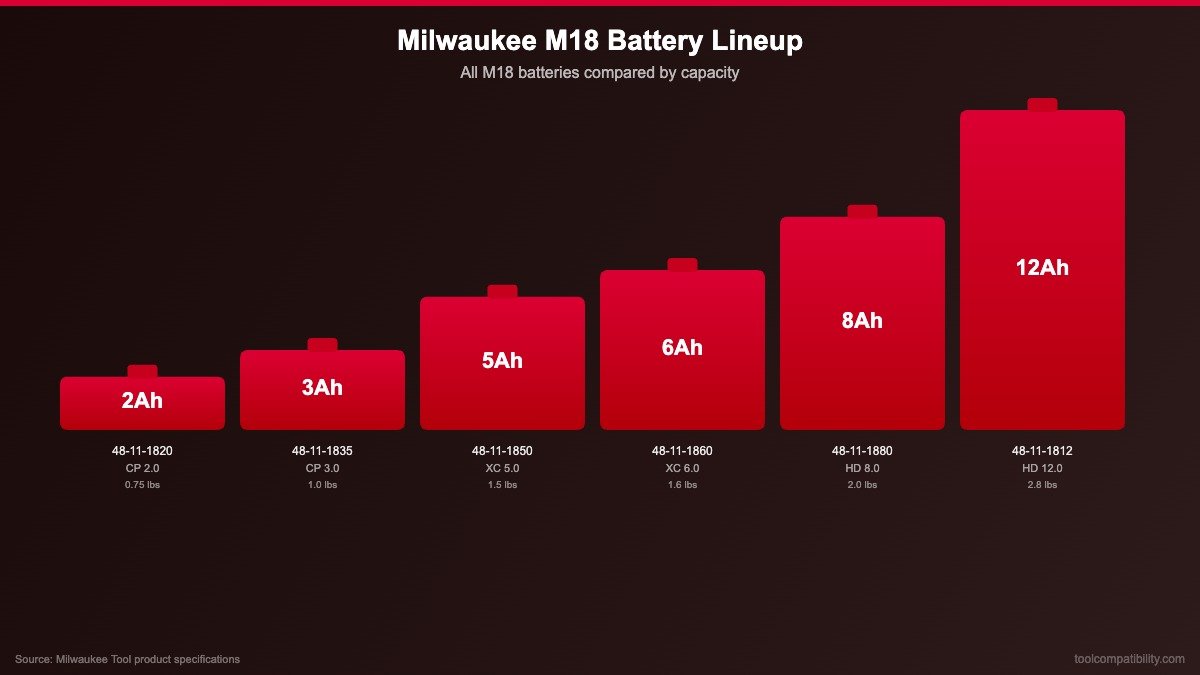
Milwaukee M18 REDLITHIUM — Features individual cell monitoring and temperature management. Milwaukee’s newer HIGH OUTPUT and FORGE batteries also include improved thermal dissipation. Typical lifespan: 3–6 years.
DeWalt 20V MAX — Standard batteries perform well for 3–5 years. The newer POWERSTACK batteries use pouch cells instead of cylindrical ones, which run cooler and may last longer in heavy-use scenarios.
Makita 18V LXT — Makita’s Star Protection system communicates between tool and battery to prevent overheating, over-discharging, and overcurrent. Compatible tools and batteries work together to extend lifespan. Typical lifespan: 3–6 years.
Ryobi ONE+ — Budget-friendly batteries may have shorter lifespans under heavy use (2–4 years), though the higher-capacity HP batteries with improved cell quality can match more premium brands.
Recommended Batteries
As an Amazon Associate we earn from qualifying purchases. Check fitment & current price on Amazon (affiliate links).
Before you buy: check that the size, fitting/bore and maximum-rated speed marked on the accessory match what your tool’s manual specifies. We have not physically tested these products; listings are compiled from published specifications. These are affiliate links.
Related Guides
For more on choosing the right batteries for your tools, check out our brand-specific comparison guides:
- Every Makita 18V LXT Battery Compared
- Every DeWalt 20V MAX Battery Compared
- Every Milwaukee M18 Battery Compared
Video Guide
Frequently Asked Questions
How should I store power tool batteries long-term?
Store batteries at 40-60% charge in a cool, dry place between 10-25°C (50-77°F). Avoid storing batteries fully charged or fully depleted for extended periods, as both extremes accelerate cell degradation. Check stored batteries every 3 months and top up to 40-50% if the charge has dropped significantly.
Can I leave my battery on the charger when not in use?
Occasionally is fine — modern chargers have overcharge protection. But habitual storage on the charger is not ideal. The constant trickle charging and heat generation can gradually reduce battery lifespan. The best practice is to remove the battery once fully charged and store it separately at room temperature.
How do I know when a battery needs replacing?
Signs a battery is failing include: noticeably shorter runtime than when new, the tool cutting out under moderate load, the battery getting unusually hot during use or charging, the charge indicator jumping erratically, or the battery failing to hold a charge for more than a day. Most lithium-ion power tool batteries last 3-5 years or 500-1000 charge cycles.
Can I revive a dead power tool battery?
If a lithium-ion battery has been deeply discharged (voltage dropped below safe levels), most chargers will refuse to charge it as a safety measure. Some chargers have a recovery mode that can slowly bring it back. Third-party battery recovery tools exist but success is not guaranteed. Prevention is better — avoid leaving batteries fully discharged for extended periods.
How we compile this guide
We cross-reference compatibility details against manufacturer specifications where available, official tool manuals, and the physical standards that govern fitment (bore sizes, arbor diameters, voltage platforms, connector types). We prioritise primary sources over retailer listings, flag anything we can’t confirm, and re-verify the data on a regular cycle. Where we give a buying recommendation, we tell you the reasoning — not just the link. More on our method →